When evaluating industrial protective coatings, hardness is often considered an important indicator of coating quality.
A hard coating surface can provide excellent resistance to scratching, abrasion, and mechanical wear.
But does a harder coating always mean better protection?
Not necessarily.
For industrial equipment exposed to vibration, deformation, transportation, lifting, temperature cycling, and mechanical impact, excessive hardness without sufficient flexibility can actually increase the risk of coating cracking.
This is why Coating Impact Resistance is an important performance factor for:
- Heavy trucks
- Dump bodies
- Trailers
- BESS containers
- Modular data centers
- Containerized equipment
- Industrial machinery
- Marine equipment
- Special-purpose vehicles
A high-performance protective coating should not simply be hard.
It should achieve the right balance between:
Hardness + Flexibility + Adhesion + Toughness + Impact Resistance
1. What Is Coating Impact Resistance?
Coating Impact Resistance describes the ability of a coating system to withstand sudden mechanical force without cracking, peeling, or losing adhesion.
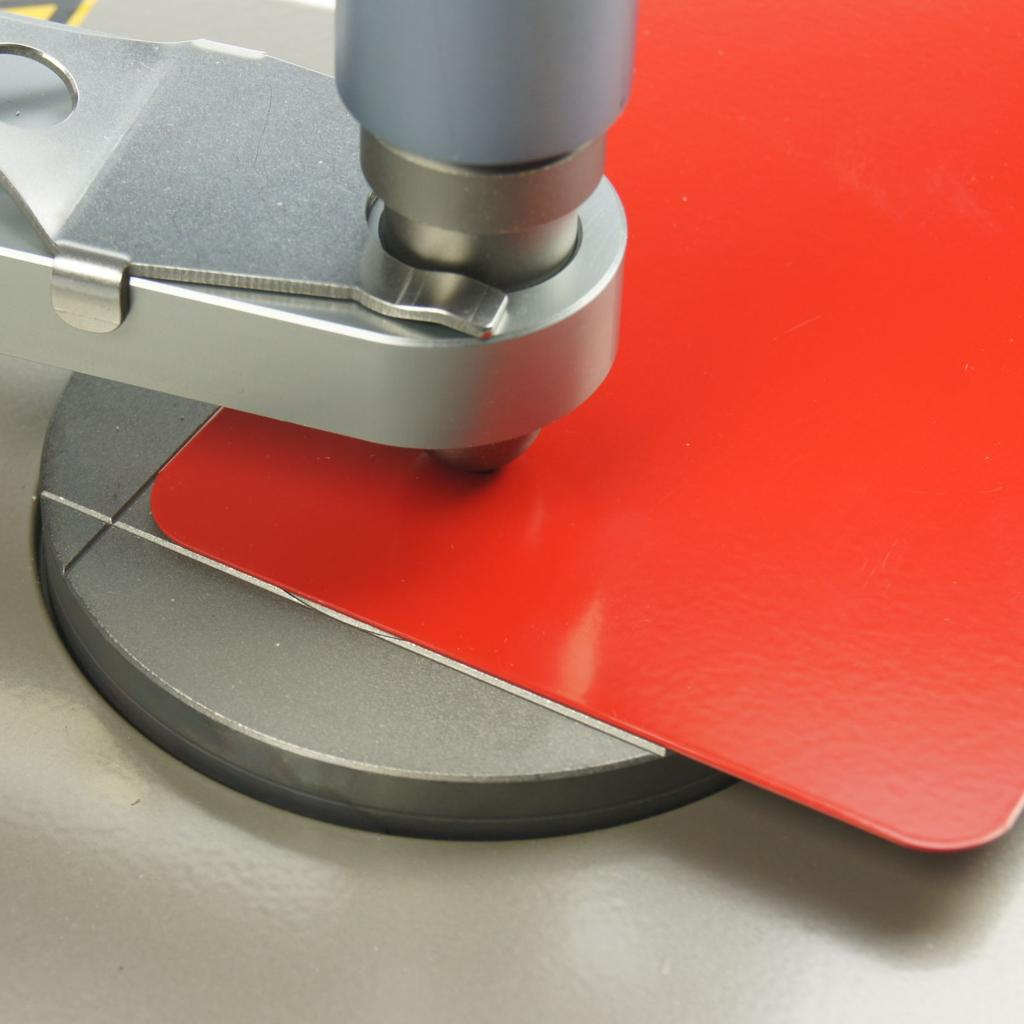
During an impact, both the coating and the substrate may deform.
A well-designed coating should be capable of accommodating a certain degree of this deformation while maintaining film integrity.
If the coating is too brittle, mechanical impact can produce:
- Cracking
- Chipping
- Delamination
- Loss of adhesion
- Local coating failure
Once the protective film is damaged, moisture and corrosive contaminants may reach the underlying steel.
Therefore, impact resistance is not simply a mechanical property.
It can also influence long-term corrosion protection.
Coating Impact Resistance can be evaluated using standardized test methods. ASTM D2794 describes a method for assessing the resistance of organic coatings to the effects of rapid deformation caused by impact.
2. Why Hardness Alone Does Not Determine Coating Performance
Hardness is valuable.
Industrial coatings need sufficient surface hardness to resist:
- Scratches
- Handling damage
- Abrasion
- Mechanical wear
However, hardness represents only one part of coating performance.
Imagine two coating films.
Coating A
Very high hardness
Low flexibility
Brittle under deformation
Coating B
Suitable hardness
Good flexibility
Strong adhesion
Higher toughness
Under static conditions, both coatings may appear excellent.
But when the steel substrate is impacted or deformed, their behavior can be completely different.
Coating A may crack because it cannot accommodate substrate deformation.
Coating B may deform with the substrate while maintaining better film integrity.
This demonstrates an important principle:
The strongest protective coating is not necessarily the hardest coating.
The objective is balanced mechanical performance.
3. Hardness and Flexibility Must Work Together
A protective coating should ideally resist surface damage while still maintaining enough flexibility to tolerate movement of the substrate.
If a coating is too soft:
- Scratch resistance may decrease
- Abrasion resistance may be insufficient
- Surface damage may occur more easily
If a coating becomes excessively brittle:
- Impact cracking may increase
- Edge chipping may occur
- Deformation can cause film failure
Therefore, formulation design requires a balance between:
Surface Hardness
and
Film Flexibility
This balance is particularly important for equipment that moves, vibrates, bends, or experiences repeated mechanical loading.
4. Why Heavy Trucks Need Good Coating Impact Resistance
Commercial vehicles operate in a completely different mechanical environment from many stationary steel structures.
A heavy truck or dump body may experience:
- Stone impact
- Gravel impact
- Cargo loading
- Road vibration
- Structural flexing
- Scratches
- Collision during operation
- Repeated mechanical stress
Consider a dump truck body.
During loading, rocks, sand, aggregate, and other materials can create substantial impact on the steel structure.
The substrate itself may undergo slight deformation.
If the coating cannot tolerate this movement, cracks or localized coating separation can develop.
This is one reason why vehicle coating systems should not be selected only according to salt spray resistance.
For commercial vehicles:
Corrosion resistance and mechanical durability must work together.
5. BESS Containers Also Experience Mechanical Stress
Battery Energy Storage Systems may appear to be relatively static after installation.
However, before reaching the final installation site, the enclosure can experience several mechanical events:
Manufacturing
↓
Factory Handling
↓
Transportation
↓
Lifting
↓
Installation
↓
Long-Term Outdoor Service
During transportation and lifting, corners, frames, doors, panels, and structural components may experience impact or localized deformation.
Temperature changes can also cause expansion and contraction of metal structures.
Therefore, coatings for BESS and modular equipment should maintain sufficient flexibility and adhesion throughout the equipment lifecycle.
This is especially important when the equipment is expected to remain outdoors for many years.
6. Temperature Cycling Can Change Mechanical Performance
Mechanical performance should not always be evaluated only at room temperature.
Outdoor equipment may experience significant temperature variation.
Depending on location and operating conditions, a steel enclosure may undergo repeated cycles of:
Heating → Expansion
and
Cooling → Contraction
The coating must accommodate these dimensional changes.
A coating that performs well under normal laboratory conditions may behave differently after:
- High-temperature exposure
- Low-temperature exposure
- Repeated temperature cycling
- Long-term weathering
If the coating becomes brittle after aging, its Coating Impact Resistance may decline.
This is why long-term coating durability should consider environmental aging together with mechanical performance.
7. Adhesion and Impact Resistance Are Closely Connected
In our previous discussion of Coating Adhesion, we explained that a protective coating must remain firmly bonded to both the substrate and adjacent coating layers.
Impact resistance is closely related to this principle.
When an external force strikes the coated surface, stress is transferred through:
Topcoat
↓
Intermediate Coat
↓
Primer
↓
Steel Substrate
If intercoat adhesion is weak, impact may cause separation between layers.
If primer adhesion is insufficient, the complete coating system may separate from the substrate.
Therefore:
Good impact resistance requires not only a tough coating film, but also strong adhesion throughout the complete coating system.
8. DFT Also Influences Mechanical Performance
Dry Film Thickness is another important factor.
A coating that is too thin may not provide sufficient barrier protection or mechanical durability.
However, excessive film thickness can also create problems depending on the coating chemistry and application conditions.
Excessive DFT may contribute to:
- Increased internal stress
- Solvent entrapment
- Incomplete curing
- Cracking
- Reduced intercoat performance
This means the relationship between:
DFT + Adhesion + Flexibility + Impact Resistance
should be evaluated as part of the complete coating system.
More paint does not automatically mean stronger mechanical protection.
9. Primer and Topcoat Must Work as a System
Industrial coating performance should not be evaluated only according to individual products.
For example, a typical commercial vehicle coating system may use:
Epoxy Primer
↓
Truck Topcoat
The epoxy primer contributes:
- Adhesion
- Corrosion resistance
- Barrier protection
The topcoat contributes:
- Weather resistance
- Color retention
- Surface durability
- Appearance
But the two layers must also have compatible mechanical properties.
If one layer is significantly more brittle than the other, deformation can create stress at the interface.
A properly designed coating system therefore considers the mechanical behavior of the entire film structure.
10. How Is Coating Impact Resistance Tested?
Impact testing provides a practical method for evaluating how a coating behaves when the coated substrate experiences sudden deformation.
A coated test panel is subjected to controlled impact using standardized equipment.
After impact, the coating is inspected for signs of:
- Cracking
- Peeling
- Delamination
- Loss of adhesion
- Other film damage
Depending on the test method, evaluation may include both:
Direct Impact
The impact is applied to the coated side of the test panel.
Reverse Impact
The force is applied from the reverse side, causing the coated surface to stretch as the substrate deforms.
Reverse impact can be particularly useful for understanding the coating’s ability to tolerate deformation.
The exact procedure should follow the applicable test standard and project requirements.
11. Why Reverse Impact Testing Is Valuable
A coating may resist a direct surface impact but behave differently when the substrate underneath it is stretched.
During reverse impact testing, deformation of the metal creates tensile stress within the coating film.
A brittle coating may develop visible cracking.
A tougher and more flexible coating may remain intact over a greater degree of deformation.
This makes reverse impact testing particularly relevant when evaluating coatings for:
- Truck bodies
- Trailers
- Sheet-metal structures
- Equipment enclosures
- Galvanized panels
- Aluminum components
where substrate deformation may occur during fabrication or service.
12. Coating Toughness Is More Important Than a Single Number
When comparing industrial coatings, it can be tempting to focus on one laboratory value.
For example:
Hardness: 2H
or
Salt Spray: 1,000 Hours
or
Impact Resistance: XX cm
These values can be useful when test conditions are clearly defined.
However, no single number can fully describe real-world coating durability.
A reliable industrial protective coating needs balanced performance across several properties:
| Property | Main Function |
|---|---|
| Hardness | Scratch and surface resistance |
| Flexibility | Ability to tolerate deformation |
| Adhesion | Maintains bonding |
| Impact Resistance | Resists sudden mechanical force |
| DFT | Provides required film build |
| Corrosion Resistance | Protects substrate |
| Weather Resistance | Maintains outdoor durability |
The complete performance profile matters more than maximizing one individual property.
13. Why a Coating Can Pass Salt Spray but Still Fail in Service
This is particularly important.
Imagine a coating that performs extremely well during laboratory salt spray testing.
Its corrosion barrier is excellent.
However, during equipment transportation, a corner receives an impact.
The coating cracks.
Moisture then penetrates through the damaged area and reaches the steel substrate.
Corrosion begins underneath the coating.
In this case:
Excellent Salt Spray Resistance
did not prevent:
Mechanical Damage → Coating Failure → Corrosion
This is why salt spray resistance should not be considered the only measure of coating durability.
For equipment exposed to both environmental and mechanical stress, the coating needs comprehensive protection.
14. Coating Impact Resistance for Harsh Environments
Different applications create different mechanical requirements.
Commercial Vehicles
Priorities may include:
- Impact resistance
- Flexibility
- Adhesion
- Abrasion resistance
- Weather resistance
BESS & Modular Equipment
Priorities may include:
- Transportation resistance
- Lifting damage resistance
- Temperature cycling
- Adhesion
- Long-term corrosion protection
Marine & Offshore Equipment
Priorities may include:
- Corrosion protection
- Mechanical durability
- Adhesion
- Humidity resistance
- Long-term coating integrity
The ideal coating system therefore depends on the real operating environment.
15. The Goal Is Balanced Coating Engineering
A professional coating formulation should not pursue the maximum possible hardness at the expense of other properties.
Instead, the goal should be:
Adequate Hardness
Good Flexibility
Strong Adhesion
High Impact Resistance
Reliable Corrosion Protection
This is particularly important for heavy-duty industrial equipment expected to operate for many years under changing environmental and mechanical conditions.
A coating should not only survive laboratory testing.
It should survive the real lifecycle of the equipment.
Frequently Asked Questions
What is Coating Impact Resistance?
Coating Impact Resistance is the ability of a coating to withstand sudden mechanical impact and substrate deformation without significant cracking, peeling, or loss of adhesion.
Does higher coating hardness mean better impact resistance?
No. High hardness can improve scratch and abrasion resistance, but excessive brittleness may reduce the coating’s ability to tolerate deformation. Hardness and flexibility should be balanced.
Why is impact resistance important for truck coatings?
Truck bodies, trailers and dump bodies experience vibration, stone impact, cargo loading, scratches and structural movement. The coating must tolerate these stresses while maintaining adhesion and corrosion protection.
Why is impact resistance important for BESS containers?
BESS containers experience handling, transportation, lifting, installation and temperature cycling. Mechanical damage to the coating can create pathways for corrosion.
Is salt spray testing enough to evaluate a protective coating?
No. Salt spray testing evaluates only part of the performance profile. Adhesion, impact resistance, flexibility, weather resistance, DFT and application quality should also be considered.
Conclusion
Coating Impact Resistance demonstrates an important principle in protective coating engineering:
Harder is not always better.
A high-performance industrial coating must achieve a balance between:
- Hardness
- Flexibility
- Adhesion
- Toughness
- Dry Film Thickness
- Corrosion resistance
- Weather resistance
For commercial vehicles, BESS containers, modular equipment, marine structures and industrial machinery, mechanical durability is directly connected to long-term corrosion protection.
If impact or deformation causes the coating to crack, even an excellent corrosion-resistant formulation can lose its protective function at the damaged area.
The objective should therefore not be to create the hardest possible coating.
It should be to create a coating system that is strong enough to resist damage and flexible enough to survive real-world movement and impact.
About GranBond
GranBond develops industrial protective coating systems for commercial vehicles, containerized and modular equipment, marine and offshore applications, and industrial steel structures.
Our coating development evaluates corrosion protection together with adhesion, hardness, flexibility, impact resistance, DFT, weather resistance and application performance.