A battery energy storage system (BESS) container may leave the factory with a smooth, uniform protective coating and satisfactory inspection results.
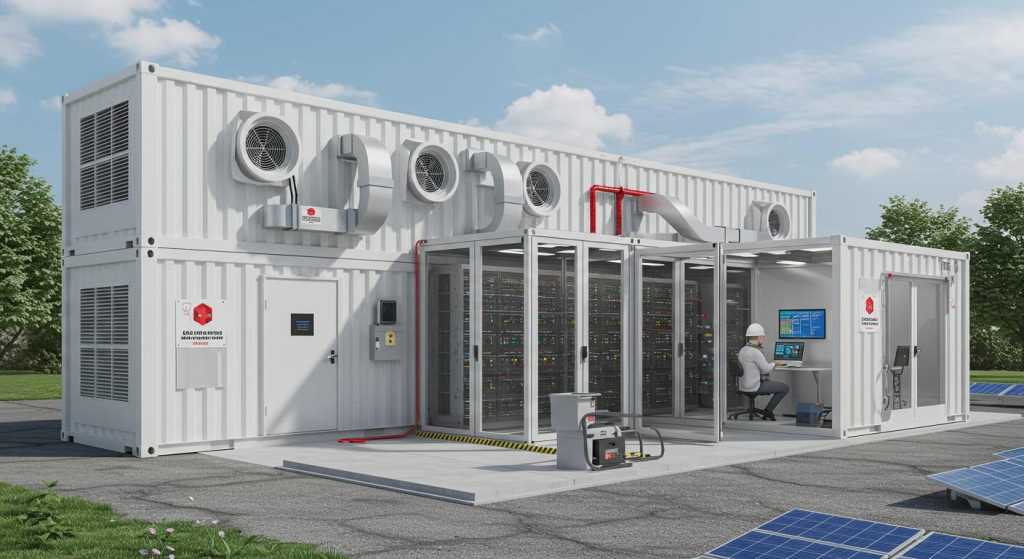
However, after transportation, lifting and on-site installation, scratches, coating chips, peeling or localized rust may begin to appear.
Why does this happen?
The answer is not always poor paint quality.
BESS containers are large industrial structures that must withstand more than outdoor corrosion. During manufacturing, transportation and installation, their protective coatings may experience mechanical impact, abrasion, vibration, deformation and contact with lifting equipment.
Even a coating system with good salt spray resistance may suffer localized damage if mechanical performance, application quality or handling procedures are inadequate.
BESS Container Coating Damage is therefore a concern for equipment manufacturers, coating suppliers, logistics teams and installation contractors.
In this article, we examine seven common causes of coating damage and practical ways to reduce the risk of premature corrosion.
1. Mechanical Impact During Transportation and Handling
One of the most common causes of BESS Container Coating Damage is mechanical contact during handling.
Large energy storage containers are frequently moved using forklifts, cranes, trailers and other heavy equipment.
During these operations, painted surfaces may come into contact with:
- Lifting equipment
- Steel chains and hooks
- Transport frames
- Securing devices
- Adjacent equipment
- Tools and installation materials
Even relatively small impacts can damage a coating if the contact force is concentrated on a sharp edge.
Once the coating is chipped or penetrated, the exposed steel may become vulnerable to corrosion.
How to Reduce the Risk
Use approved lifting points and handling procedures.
Protect painted surfaces from direct contact with chains, hooks and other hard objects where appropriate.
Inspect vulnerable areas before and after transportation.
For equipment exposed to repeated handling, coating impact resistance should be considered during system selection.
However, impact resistance does not mean that a coating is immune to mechanical damage.
2. Poor Coating Adhesion to the Steel Substrate
A coating may initially appear acceptable but develop peeling after transportation or installation.
One possible cause is inadequate adhesion.
Protective coating adhesion depends on several factors, including:
Surface Cleanliness
Oil, grease, dust and soluble contaminants can interfere with adhesion.
Surface Preparation
The substrate must be prepared according to the selected coating system.
Surface Profile
For blast-cleaned steel, the surface profile must be compatible with the primer and coating specification.
Coating Compatibility
Primer, intermediate coat and topcoat materials must form a compatible system.
Curing Conditions
Insufficient curing can affect mechanical properties and adhesion development.
If adhesion is inadequate, mechanical stress during transportation may cause coating separation.
This is particularly important around welded connections, lifting structures and areas exposed to localized deformation.
To reduce BESS Container Coating Damage, manufacturers should verify adhesion and coating compatibility using appropriate project-specific inspection procedures.
Coating adhesion is an important performance factor for industrial equipment exposed to handling and transportation stresses. ISO 4624 describes the pull-off test method for evaluating the adhesion of paints and varnishes, helping manufacturers assess coating system performance under standardized test conditions.
3. Insufficient Coating Flexibility During Structural Movement
BESS containers are large welded structures.
During lifting, transportation and installation, they may experience limited elastic deformation and vibration.
Although the steel structure is designed to withstand specified handling loads, these movements can introduce stress into the coating system.
A protective coating must maintain sufficient integrity under the expected service and handling conditions.
Coatings with unsuitable flexibility, excessive brittleness or poor intercoat adhesion may be more vulnerable to cracking or delamination when the substrate deforms.
However, coating flexibility cannot compensate for excessive structural deformation or improper lifting practices.
Important Considerations
The coating system should be evaluated for the expected mechanical conditions.
Relevant properties may include:
- Flexibility
- Impact resistance
- Adhesion
- Hardness
- Curing behavior
- Intercoat compatibility
A balanced coating formulation is essential.
A harder coating is not automatically more durable under every mechanical condition.
For BESS container manufacturers, the goal is to select a system that provides corrosion resistance while maintaining appropriate mechanical performance.
4. Excessive or Uneven Dry Film Thickness
Dry film thickness (DFT) is an important part of industrial coating quality control.
A coating that is too thin may provide insufficient protection.
However, applying an excessively thick coating does not necessarily improve durability.
Depending on the formulation, excessive film thickness may contribute to:
- Solvent retention
- Incomplete curing
- Cracking
- Sagging
- Increased internal stress
- Poor appearance
Uneven film thickness can also create localized weak points.
For example, flat steel panels may meet the specified DFT while edges, corners and welded connections receive inadequate coverage.
These locations are especially vulnerable during transportation and installation.
Typical Coating System Example
For outdoor carbon steel BESS containers, an illustrative coating system may include:
| Coating Layer | Reference DFT | Main Function |
|---|---|---|
| Epoxy Zinc-Rich Primer | 60–80 μm | Corrosion protection |
| High-Build Epoxy Intermediate | 100–150 μm | Barrier protection |
| Polyurethane Topcoat | 40–60 μm | UV and weather resistance |
| Total | 200–290 μm | Combined protection |
These values are illustrative rather than universal specifications.
Actual coating thickness must be determined according to the substrate, corrosivity category, coating products and project requirements.
For galvanized steel, a different surface preparation and primer selection may be necessary.
Controlling DFT helps reduce the risk of BESS Container Coating Damage, but thickness must be considered together with adhesion, curing and mechanical performance.
5. Inadequate Protection of Edges, Welds and Lifting Points
Edges and welded joints are common locations for localized coating damage.
Their geometry makes it difficult to achieve uniform coverage during conventional spray application.
Sharp edges may receive less coating than nearby flat surfaces.
Weld toes, reinforcement brackets and lifting structures can also create spray-shadow areas.
During transportation, these locations may experience additional mechanical contact or stress.
If the protective film is already thin, localized damage can expose the underlying steel.
Why Stripe Coating Matters
Stripe coating involves applying an additional localized coat to critical details, such as:
- Steel edges
- Weld seams
- Corners
- Reinforcement brackets
- Other difficult-to-coat areas
When specified and correctly applied, stripe coating can improve localized coverage.
However, it cannot repair defective welds or eliminate the need for proper edge preparation.
For long-term BESS container protection, critical structural details should be addressed during both fabrication and coating application.
6. Insufficient Curing Before Transportation
A coating may feel dry to the touch without having developed its full mechanical or chemical resistance.
This distinction is especially important for two-component epoxy and polyurethane coatings.
After application, these systems require time to develop their intended properties through curing.
The actual curing period depends on:
- Coating formulation
- Film thickness
- Ambient temperature
- Substrate temperature
- Ventilation
- Mixing ratio
- Manufacturer’s technical requirements
If a container is handled, stacked or transported before the coating has reached the required condition, the surface may be more susceptible to marking, abrasion or damage.
Surface Dry Is Not the Same as Fully Cured
A surface-dry coating may still be unsuitable for heavy mechanical contact.
Similarly, the minimum recoat interval is not necessarily the same as the time required before transportation.
Manufacturers should establish handling and transportation readiness criteria based on the coating supplier’s technical data sheet and validated production procedures.
Proper curing control can help prevent avoidable BESS Container Coating Damage during logistics operations.
7. Improper Coating Repair After Installation
Even with careful handling, some localized coating damage may occur during transportation or installation.
The final outcome depends partly on how these areas are repaired.
A common mistake is to apply topcoat directly over damaged or corroded steel without proper preparation.
This may improve appearance temporarily but may not restore the original protective system.
Recommended Repair Principles
Step 1: Assess the Damage
Determine whether the defect affects only the topcoat or extends through the intermediate coat and primer to the substrate.
Step 2: Prepare the Surface
Remove loose coating, corrosion products and contamination according to the approved repair procedure.
Step 3: Restore the Protective Layers
Use compatible repair materials appropriate for the depth and extent of the damage.
Step 4: Control Film Thickness
Restore the specified protective coating thickness without excessive local buildup.
Step 5: Inspect the Repair
Check visual appearance, coating continuity and other required acceptance criteria.
For critical applications, repair procedures should be agreed upon between the coating supplier, equipment manufacturer and project quality team.
A correctly designed repair can restore protection in the affected area, but the repair must be compatible with the original system.
Salt Spray Resistance vs. Mechanical Damage Resistance
Salt spray testing is commonly used to evaluate aspects of coating corrosion resistance under controlled laboratory conditions.
However, a coating that performs well in a salt spray test is not necessarily resistant to every form of mechanical damage.
These properties address different performance requirements.
| Performance Property | What It Evaluates |
|---|---|
| Salt Spray Resistance | Corrosion-related behavior under specified laboratory exposure |
| Adhesion | Bonding performance at coating interfaces |
| Impact Resistance | Response to specified impact loading |
| Flexibility | Response to deformation under defined test conditions |
| Hardness | Resistance to indentation or other defined test methods |
| Abrasion Resistance | Response to specified surface wear |
| Weathering Resistance | Appearance and performance changes under environmental exposure |
No single laboratory test fully represents all conditions encountered during manufacturing, transportation and outdoor service.
For reliable protection, a BESS container coating system should be selected and validated against the actual project requirements.
BESS Container Coating Damage Prevention Checklist
A practical prevention strategy should cover the complete manufacturing and delivery process.
| Project Stage | Recommended Control |
|---|---|
| Steel Fabrication | Prepare edges, welds and structural details |
| Surface Preparation | Remove contamination and achieve specified surface condition |
| Primer Application | Ensure adhesion and compatible corrosion protection |
| Intermediate Coating | Control barrier protection and DFT |
| Topcoat Application | Achieve the required finish and mechanical properties |
| Curing | Confirm handling readiness before transportation |
| Transportation | Protect vulnerable surfaces and use approved handling methods |
| Installation | Inspect contact points and repair damage promptly |
| Final Acceptance | Verify coating condition and document repairs |
The objective is to prevent damage wherever possible and ensure that any unavoidable damage is properly addressed before final acceptance.
Why Coating Damage Matters for Long-Term BESS Protection
BESS containers are designed to protect valuable electrical and energy storage equipment.
The external coating system is only one part of the overall enclosure protection strategy, but it plays an important role in limiting corrosion of exposed structural surfaces.
When coating damage exposes steel, corrosion may begin at the affected location.
If left untreated, localized corrosion can spread and increase future maintenance requirements.
This does not mean every scratch will immediately cause serious equipment damage.
The actual risk depends on defect severity, substrate, environmental exposure and repair quality.
Nevertheless, early inspection and suitable repair are generally more practical than allowing preventable corrosion to develop.
For large BESS projects, consistent coating quality also contributes to appearance, customer acceptance and maintenance planning.
Frequently Asked Questions
Why does BESS container paint peel after transportation?
Possible causes include inadequate adhesion, mechanical impact, incomplete curing, incompatible coating layers or improper handling. The actual cause should be confirmed through inspection.
Can a coating pass salt spray testing but still be scratched easily?
Yes. Salt spray resistance and mechanical damage resistance are different properties. A complete coating specification should consider both.
Is a thicker coating always better for BESS containers?
No. Coating thickness should follow the approved system specification. Excessive thickness may introduce defects without improving mechanical durability.
Why are lifting points vulnerable to coating damage?
Lifting points may experience concentrated contact and mechanical stress during handling. They may also contain welded details that require careful coating application.
Can damaged polyurethane topcoat be repaired without removing the entire coating system?
Sometimes. If the damage is limited to the topcoat and the underlying layers remain sound, a localized repair may be possible. The repair procedure must follow the approved coating system requirements.
How can manufacturers reduce coating damage during transportation?
Use proper handling equipment, protect vulnerable surfaces, allow sufficient curing, inspect equipment before shipment and establish a suitable repair procedure.
GranBond Industrial Coating Solutions
At GranBond, we understand that protective coatings for energy storage containers must withstand more than outdoor corrosion.
They must also perform reliably throughout manufacturing, handling, transportation, installation and service.
Our coating solutions for containerized and modular equipment include epoxy primers, high-build epoxy intermediate coatings and weather-resistant polyurethane topcoats.
We focus on important performance characteristics such as:
- Corrosion resistance
- Coating adhesion
- Impact resistance
- Film thickness control
- Application efficiency
- Weathering resistance
- System compatibility
Coating selection should be based on the actual substrate, operating environment, manufacturing process and project specification.
Looking for a More Reliable BESS Container Coating System?
GranBond supports manufacturers of BESS containers, modular data centers and other industrial enclosures with protective coating system selection and application guidance.
Contact our technical team to discuss corrosion protection, mechanical performance and coating quality requirements for your next project.
GranBond — BUILT FOR HARSH ENVIRONMENTS.