Corrosion Protection Is More Than Salt Spray and Weather Resistance
As Battery Energy Storage Systems (BESS), modular data centers, E-Houses, and containerized industrial equipment become increasingly common, manufacturers are placing greater emphasis on coating performance. Salt spray resistance, weatherability, and UV resistance are often considered the primary indicators of a high-quality protective coating.
However, there is another critical property that is frequently overlooked—impact resistance.
For equipment designed to operate outdoors for decades, corrosion protection depends not only on resisting moisture and ultraviolet radiation but also on the coating’s ability to withstand mechanical impacts and structural movement throughout its service life.
Outdoor Equipment Faces More Than Corrosion
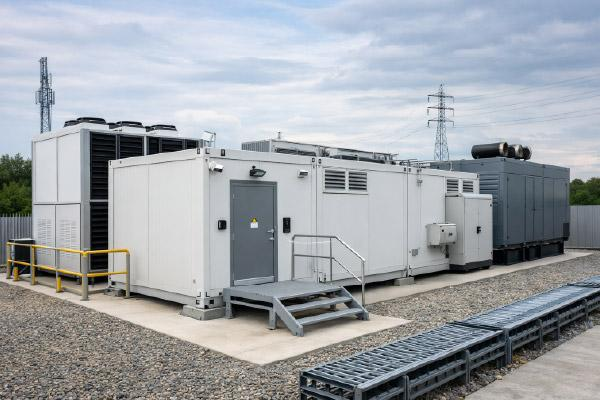
Heavy-duty industrial equipment is continuously exposed to challenging environments, including:
- Ultraviolet (UV) radiation
- Rain and humidity
- Salt-laden coastal air
- Daily temperature fluctuations
- Seasonal thermal cycling
- Transportation and lifting
- Routine maintenance and accidental impacts
These conditions place constant stress on the entire coating system—not just its corrosion resistance.
Passing a Salt Spray Test Does Not Guarantee Long-Term Protection
Many people assume that a coating capable of passing long-duration salt spray or weathering tests will perform well in real-world applications.
In reality, this assumption can be misleading.
If a coating becomes brittle after prolonged UV exposure, repeated thermal cycling, or temperature extremes, even a relatively minor mechanical impact may cause:
- Cracking
- Edge chipping
- Local delamination
- Coating failure
Once the protective barrier is damaged, moisture, oxygen, and corrosive contaminants can quickly penetrate the exposed substrate, accelerating corrosion beneath the coating.
For this reason, excellent salt spray performance alone cannot ensure long-term durability.
Why Impact Resistance Matters
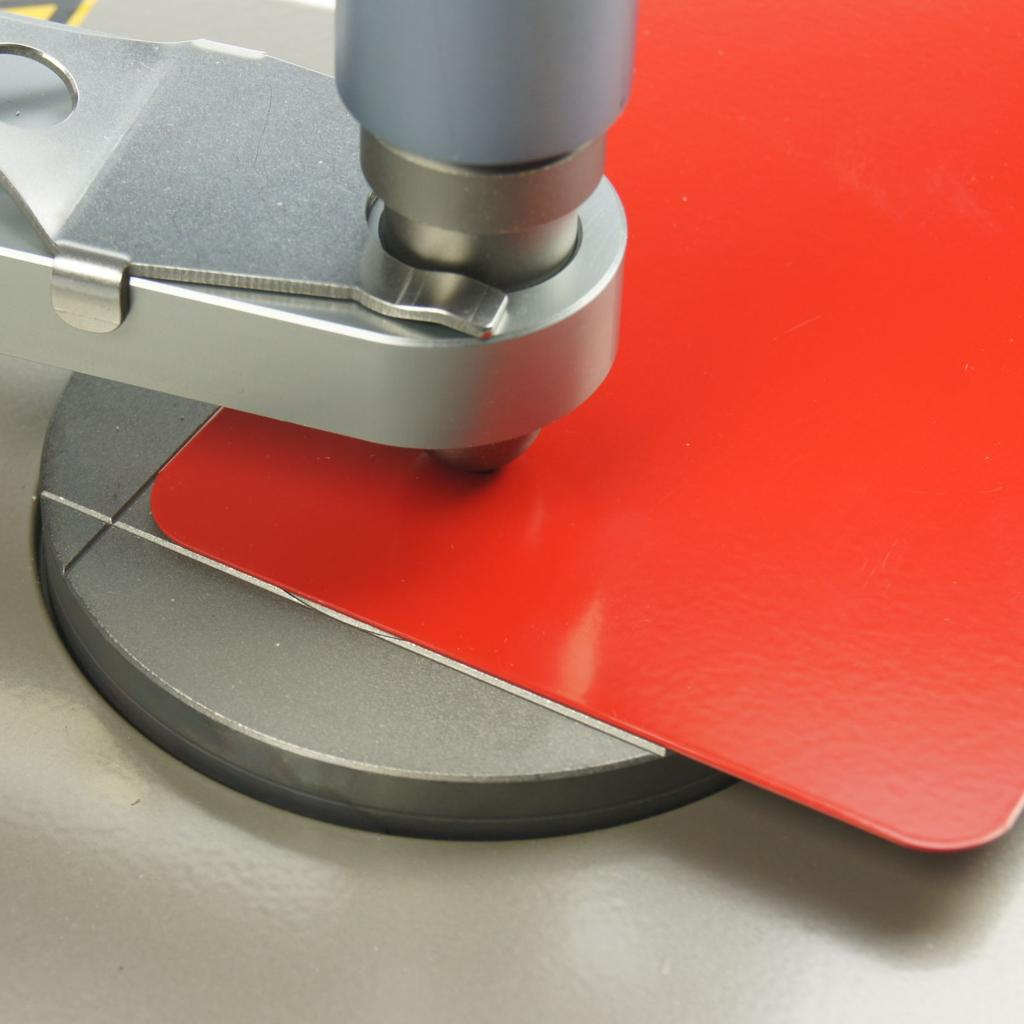
Impact resistance measures a coating system’s ability to absorb sudden mechanical forces without cracking or losing adhesion.
During the service life of industrial equipment, impacts may occur during:
- Transportation
- Crane lifting
- Installation
- Routine maintenance
- Accidental tool contact
A coating with poor impact resistance may fail even though its corrosion resistance is excellent.
A High-Performance Coating System Must Work as One
Outstanding corrosion protection is not achieved by selecting a high-quality primer, intermediate coat, or topcoat individually.
Instead, the entire coating system must function as an integrated protective structure.
A balanced heavy-duty coating system should provide:
Strong Intercoat Adhesion
Each coating layer must bond securely to the next, allowing the system to perform as a single protective barrier.
The Right Balance Between Hardness and Flexibility
A coating that is too hard may become brittle and crack under impact.
A coating that is too soft may suffer from poor abrasion resistance and reduced mechanical strength.
The ideal coating system achieves a balance between hardness and flexibility.
Controlled Internal Stress
Temperature changes cause steel substrates to expand and contract.
A properly engineered coating system maintains balanced internal stress, allowing the coating to move with the substrate instead of cracking due to stress concentration.
Comprehensive Testing Creates Reliable Protection
At GranBond, coating development goes beyond conventional corrosion testing.
In addition to evaluating:
- Salt Spray Resistance
- Weather Resistance
- Adhesion
- UV Durability
Our coating systems are also verified through:
- Impact Resistance Testing
- Mechanical Performance Testing
- Thermal Cycling Testing
- Comprehensive coating system evaluation
These tests help ensure reliable performance under complex service conditions.
Why Overall System Performance Matters Most
For Battery Energy Storage Systems, modular data centers, industrial enclosures, and containerized equipment, service life is determined by the overall performance of the complete coating system—not by a single laboratory result.
An excellent heavy-duty protective coating should provide:
- Long-term corrosion protection
- Strong mechanical durability
- Excellent flexibility
- Reliable impact resistance
- Stable performance throughout the entire service life
Only when all these properties work together can manufacturers achieve truly durable protection for outdoor industrial equipment.
Impact resistance can be evaluated using ASTM D2794, while corrosion resistance is commonly assessed through salt spray testing according to ISO 9227.
Frequently Asked Questions
Is salt spray resistance enough to evaluate a protective coating?
No. Salt spray testing measures corrosion resistance but does not evaluate how a coating performs under mechanical impact, transportation, or thermal movement.
Why is impact resistance important for BESS and modular enclosures?
Outdoor equipment experiences transportation, installation, thermal expansion, and accidental impacts throughout its service life. Good impact resistance helps prevent coating damage that could expose the substrate to corrosion.
What makes a high-performance heavy-duty coating system?
A complete system combines excellent adhesion, balanced hardness and flexibility, impact resistance, weather resistance, and long-term corrosion protection.
Conclusion
Heavy-duty corrosion protection is about much more than passing a salt spray test.
For outdoor applications such as Battery Energy Storage Systems, modular data centers, E-Houses, and industrial containers, coatings must withstand corrosion, temperature fluctuations, and mechanical impacts throughout their service life.
A truly high-performance coating system combines corrosion resistance, flexibility, adhesion, and impact resistance into one integrated solution—providing reliable protection in the harshest environments.