As battery energy storage systems, AI infrastructure, and modular data centers expand worldwide, more high-value equipment is being installed in outdoor environments for extended service periods.
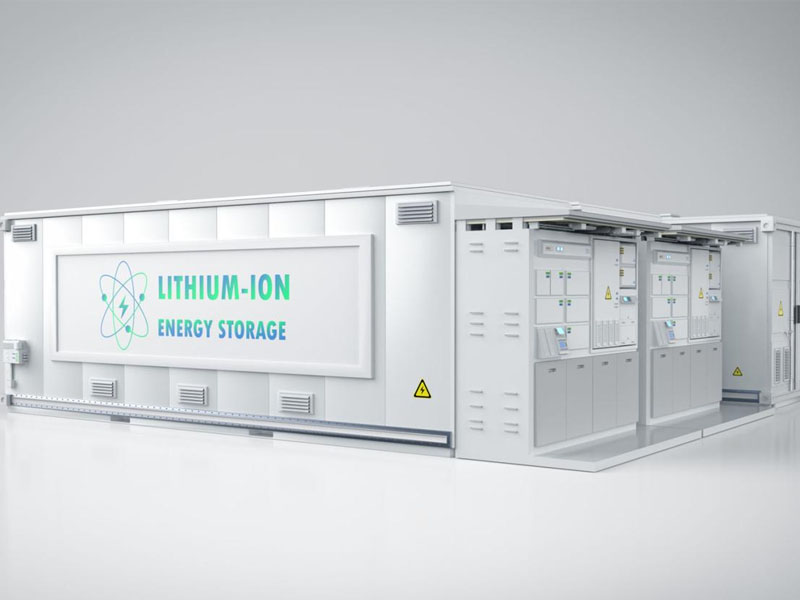
A BESS Container Coating is therefore expected to do much more than simply keep a steel enclosure looking clean.
The enclosure may protect valuable systems including:
- Battery modules
- Power conversion equipment
- Servers and computing hardware
- Cooling systems
- Electrical equipment
- Control systems
- Fire protection systems
For these assets, corrosion protection and long-term coating integrity can become an important part of overall equipment reliability.
When discussing protective coatings for BESS containers and modular data centers, two questions are frequently asked:
How many hours of salt spray testing can the coating pass?
and:
What is the total Dry Film Thickness (DFT)?
Both are important.
But neither number, by itself, can demonstrate that a coating system will provide 10, 15, or more years of protection in a particular outdoor environment.
Long-term protection requires a complete coating system designed around the actual service conditions.
1. BESS Containers Face More Than One Type of Environmental Stress
Unlike indoor steel structures, outdoor BESS containers and modular data centers can be exposed to multiple environmental stresses simultaneously.
These may include:
- Strong UV radiation
- Solar exposure
- Daily temperature changes
- Seasonal thermal cycling
- High humidity
- Condensation
- Coastal salt deposition
- Chloride contamination
- Rain
- Dust
- Industrial pollutants
- Chemical contaminants
- Long-term thermal aging
The challenge is therefore not simply whether the coating can withstand one individual exposure.
The more important question is:
How does the complete coating system perform when multiple environmental stresses act on it over many years?
For this reason, we prefer to approach BESS Container Coating as a complete protective system rather than simply selecting a “high salt spray resistance paint.”
2. Salt Spray Resistance Is Important — But Salt Spray Hours Are Not Everything
Salt spray testing is widely used to evaluate and compare corrosion protection performance.
It can be particularly relevant for equipment installed in:
- Coastal environments
- High-humidity regions
- Areas with significant salt deposition
- Other aggressive environments
However, actual outdoor corrosion is more complex than continuous laboratory salt spray exposure.
After salts accumulate on a coating surface, moisture and chloride ions can migrate through defects and microscopic pathways within the coating system.
If corrosive species eventually reach the steel substrate, underfilm corrosion may begin.
This can lead to:
Moisture / Chloride Penetration
↓
Corrosion Initiation
↓
Underfilm Corrosion
↓
Blistering
↓
Loss of Adhesion
↓
Coating Failure
Therefore, instead of asking only:
“How many salt spray hours can it pass?”
BESS manufacturers should also consider:
How effectively does the coating system slow the penetration of water, oxygen, chlorides, and other corrosive species?
This involves much more than a single laboratory result.
3. DFT Matters — But Thicker Does Not Automatically Mean Better
Dry Film Thickness (DFT) is one of the most important quality-control parameters in heavy-duty protective coatings.
But there is a common misconception:
More coating thickness automatically means longer service life.
This is not necessarily true.
A high-performance BESS Container Coating should use different coating layers to perform different functions.
A typical protective architecture might include:
Epoxy Primer
The primer provides adhesion to properly prepared steel and establishes the first corrosion-protection barrier.
Epoxy Intermediate Coat
The intermediate layer builds film thickness and improves barrier protection, helping increase the path that moisture and corrosive species must travel before reaching the substrate.
Aliphatic Polyurethane Topcoat
The topcoat provides long-term exterior performance, including:
- UV resistance
- Weather resistance
- Color retention
- Gloss retention
- Surface protection
The objective is therefore not simply to make the coating as thick as possible.
The objective is to create a balanced multi-layer protective system.
4. Surface Preparation Comes Before Coating Thickness
Even an advanced protective coating system can fail prematurely when applied to an inadequately prepared surface.
Before coating application, the substrate must be evaluated for contaminants such as:
- Oil
- Grease
- Rust
- Mill scale
- Dust
- Moisture
- Soluble salts
- Other contamination
For many heavy-duty systems applied to carbon steel, abrasive blast cleaning may be specified.
The required surface cleanliness and profile should match the coating specification, substrate, environmental category, and selected primer.
This is particularly important when targeting long service intervals.
A 300 μm coating system applied to a poorly prepared substrate is not automatically more reliable than a properly designed thinner system applied to correctly prepared steel.
DFT cannot compensate for poor surface preparation.
5. Chloride Penetration Is an Important Consideration
For BESS containers and modular data centers installed near:
- Coastlines
- Ports
- Islands
- Marine environments
- High-salinity industrial areas
chloride exposure deserves particular attention.
Chlorides can promote corrosion when moisture and ions reach the steel/coating interface.
For long-term corrosion protection, the coating system should therefore aim to form a protective barrier with:
- Low water uptake
- Low permeability
- Good film density
- Strong substrate adhesion
- Strong intercoat adhesion
- Long-term film integrity
This is one reason why ordinary decorative coatings are generally not an appropriate substitute for a properly engineered heavy-duty protective system in severe environments.
6. Chemical Resistance Should Not Be Ignored
A data center or energy storage facility does not need to be located inside a chemical plant to experience chemical exposure.
Outdoor industrial environments may contain:
- Atmospheric pollutants
- Acidic contaminants
- Alkaline contaminants
- Cleaning chemicals
- Salts
- Deposited industrial particles
Over extended exposure, an unsuitable coating may experience:
- Gloss loss
- Discoloration
- Chalking
- Softening
- Blistering
- Loss of adhesion
For equipment expected to remain outdoors for many years, chemical resistance should therefore be considered as part of the overall coating selection process.
The exact resistance requirements should be based on the chemicals and concentrations expected at the installation site.
7. UV Radiation Is a Major Challenge for Outdoor Equipment
The exterior surface of a BESS container can receive thousands of hours of sunlight during its service life.
Long-term UV exposure can cause unsuitable coating systems to experience:
- Chalking
- Fading
- Gloss reduction
- Surface degradation
- Loss of appearance
Epoxy coatings are widely used for corrosion protection, but conventional epoxy systems are generally not selected as the final exposed decorative/weathering layer where long-term UV and appearance retention are required.
This is why outdoor systems commonly use a weather-resistant topcoat such as an aliphatic polyurethane topcoat over the epoxy layers.
The topcoat is not simply decorative.
It is a functional part of the protective coating system.
8. Solar Radiation and Surface Temperature Deserve More Attention
For BESS containers and AI data centers installed in high-temperature, high-solar-radiation regions, another consideration is becoming increasingly relevant:
Solar Reflectance.
This may be particularly important in markets such as:
- The Middle East
- Southeast Asia
- Australia
- Southern United States
- Other hot and sunny regions
Coating color, pigment selection, surface properties, and solar reflectance can influence how much solar energy is absorbed by an exterior surface.
For certain projects, this means coating selection may consider not only:
UV Resistance
Weather Resistance
Color Retention
Gloss Retention
but potentially also:
Solar Reflectance
However, this should be evaluated as part of the complete thermal design of the enclosure rather than assuming a coating alone can solve equipment cooling requirements.
9. The Topcoat Is More Than a Color Layer
When specifying a topcoat, color and gloss naturally receive significant attention.
They matter because BESS containers and modular data centers are increasingly visible industrial assets.
But the topcoat performs a much larger technical role.
A high-performance outdoor topcoat helps protect the coating system against:
- UV radiation
- Rain
- Weathering
- Atmospheric contamination
- Temperature changes
- Surface degradation
If the topcoat prematurely chalks, cracks, or loses integrity, the underlying layers may become more exposed to the environment.
Therefore:
The topcoat should be treated as a functional protective layer—not merely a decorative finish.
10. Adhesion Must Be Maintained Between Every Layer
A long-life coating system depends on more than adhesion between primer and steel.
Consider a three-layer system:
Polyurethane Topcoat
↓
Epoxy Intermediate Coat
↓
Epoxy Primer
↓
Steel
Every interface matters.
Weak intercoat adhesion can cause:
- Delamination
- Peeling
- Localized coating failure
- Reduced barrier performance
Factors that may influence adhesion include:
- Surface preparation
- Surface contamination
- Recoat interval
- Curing conditions
- Coating compatibility
- Excessive DFT
- Moisture
- Application quality
For long-term outdoor equipment, the coating should behave as one integrated protective system.
11. Thermal Cycling Can Challenge Coating Integrity
BESS containers and modular data centers can experience repeated temperature changes throughout their service life.
The steel substrate expands and contracts as temperature changes.
The coating system must accommodate this movement.
If the coating becomes excessively brittle, repeated thermal cycling can contribute to:
- Microcracking
- Loss of adhesion
- Stress concentration
- Local film failure
This is why flexibility, toughness, and impact resistance should also be considered when evaluating long-term outdoor durability.
A protective coating should remain attached and intact—not simply remain hard.
12. Mechanical Damage Can Become a Corrosion Starting Point
Before a BESS container begins its operational life, it may already have experienced:
Manufacturing
→
Factory Handling
→
Transportation
→
Lifting
→
Installation
Even small mechanical defects can become potential pathways for corrosion if they expose or weaken the protective coating.
This is why impact resistance and coating toughness are particularly relevant for containerized equipment.
The coating system needs to survive not only the final environment, but also the journey to the installation site.
13. What Should Be Considered for 10–15+ Years of Outdoor Protection?
If a project is targeting a long protection period, coating selection should move beyond individual test numbers.
A more complete evaluation may consider:
- Environmental corrosivity
- Surface preparation
- Surface profile
- Primer adhesion
- Barrier performance
- Dry Film Thickness
- Water resistance
- Chloride exposure
- Salt spray performance
- Chemical resistance
- UV resistance
- Weather resistance
- Color retention
- Gloss retention
- Thermal cycling
- Coating flexibility
- Impact resistance
- Intercoat adhesion
- Application conditions
- Curing
- Inspection
- Maintenance strategy
This is what transforms paint selection into protective coating engineering.
14. C4 or C5? Start With the Real Environment
Not every BESS container requires the same corrosion protection system.
This is a critical point.
A container installed in a relatively moderate inland environment may have very different requirements from one installed near a coastline.
Instead of automatically specifying the highest possible corrosion category, the project should evaluate:
Actual Corrosivity
Required Durability
Asset Value
Maintenance Accessibility
Expected Service Conditions
The coating specification can then be designed accordingly.
For severe atmospheric environments, C5-class protective coating systems may be considered where appropriate.
For less aggressive conditions, another system may provide a better balance between performance and cost.
Long-term corrosion protection should be designed according to the actual service environment rather than a single laboratory result. The ISO 12944 series provides internationally recognized guidance for classifying atmospheric corrosivity and planning protective paint systems for steel structures.
15. Different Regions Require Different Coating Strategies
There is no single BESS Container Coating specification that is ideal for every installation worldwide.
Coastal Regions
Priorities may include:
- Salt deposition
- Chloride exposure
- Humidity
- Barrier protection
Middle East
Priorities may include:
- Strong UV radiation
- High temperature
- Solar exposure
- Sand and dust
- Weather resistance
Southeast Asia
Priorities may include:
- High humidity
- High temperature
- Condensation
- Heavy rainfall
- Corrosion protection
Industrial Areas
Priorities may include:
- Atmospheric pollutants
- Chemical contaminants
- Corrosion
- Surface contamination
Cold Regions
Priorities may include:
- Low temperature
- Freeze/thaw or temperature cycling where relevant
- Coating flexibility
- Adhesion
Therefore, the coating system should begin with the environment—not with a predetermined paint package.
16. Can a Coating System Really Provide 10–15+ Years of Protection?
This question needs to be answered carefully.
A coating manufacturer should not simply take a laboratory result and convert it directly into a guaranteed number of outdoor service years.
Actual durability depends on variables including:
- Corrosivity category
- System selection
- Surface preparation
- Application quality
- DFT
- Design details
- Environmental exposure
- Inspection
- Maintenance
- Damage during service
Standards such as ISO 12944 use durability concepts to support planning of protective paint systems, but durability should not be confused with a simple warranty period.
Therefore, when discussing 10–15+ years, the correct engineering approach is:
Design the complete coating system around the required durability and actual environment, then validate and control the factors that determine its performance.
This is much more meaningful than claiming that a certain number of salt spray hours automatically equals a certain number of years outdoors.
Salt spray testing remains a useful method for comparing corrosion resistance under controlled laboratory conditions. ISO 9227 specifies standardized salt spray test methods commonly used for evaluating metallic materials and protective coatings.
17. The Objective Is to Protect the Industrial Asset
The value of the coating on a BESS container is small compared with the value of the equipment it protects.
Inside the enclosure may be:
- Batteries
- Power electronics
- Servers
- Cooling equipment
- Electrical systems
- Control systems
Therefore, corrosion protection should ultimately be evaluated in terms of:
Asset Reliability
Maintenance Requirements
Lifecycle Cost
Operational Risk
Equipment Appearance
Long-Term Structural Protection
From this perspective, industrial coatings are not simply surface finishing materials.
They are part of industrial asset lifecycle management.
Recommended BESS Container Coating Design Logic
A practical coating specification can follow this sequence:
1. Identify the Installation Environment
↓
2. Determine Corrosivity and Durability Requirements
↓
3. Define Surface Preparation
↓
4. Select the Primer
↓
5. Design Barrier Protection
↓
6. Select the Weather-Resistant Topcoat
↓
7. Define DFT for Each Layer
↓
8. Evaluate Mechanical and Environmental Performance
↓
9. Control Application and Curing
↓
10. Inspect the Completed System
↓
11. Establish Maintenance Requirements
This is a much stronger approach than specifying a coating based only on salt spray hours.
Frequently Asked Questions
What is the best BESS Container Coating?
There is no single best BESS Container Coating for every project. The correct system depends on corrosivity, climate, substrate, required durability, application process and maintenance strategy.
Is 1,000 or 2,000 hours of salt spray enough for a BESS container?
Salt spray results can provide useful comparative data, but they should not be directly converted into outdoor service years. Long-term performance also depends on surface preparation, adhesion, DFT, UV exposure, water resistance, coating integrity and application quality.
Should BESS containers use C4 or C5 coating systems?
The appropriate category depends on the actual installation environment and project specification. Coastal or highly aggressive industrial locations may require a more robust system than moderate inland environments.
Why use an epoxy intermediate coat?
An epoxy intermediate coat can increase film build and improve barrier protection, helping slow the movement of water and corrosive species toward the substrate.
Why use an aliphatic polyurethane topcoat?
An aliphatic polyurethane topcoat is commonly selected for outdoor systems where UV resistance, weather resistance, color retention and gloss retention are important.
Does thicker paint provide longer corrosion protection?
Not automatically. DFT should follow the designed coating specification. Excessive or insufficient film thickness can both create performance problems.
Can a coating guarantee 15 years without maintenance?
Actual service life depends on the environment, coating system, application quality, damage, inspection and maintenance. Long durability should therefore be treated as a system-design objective rather than a simple laboratory-test guarantee.
Conclusion
Long-term protection for BESS containers, AI data centers and modular industrial equipment cannot be reduced to two numbers:
Salt Spray Hours + Total DFT
Both are important, but they represent only part of the complete corrosion protection strategy.
A reliable BESS Container Coating system should consider:
Surface Preparation
Primer Adhesion
Barrier Protection
Correct DFT
Chloride and Water Resistance
Chemical Resistance
UV & Weather Resistance
Thermal Cycling
Mechanical Durability
Application Quality
Inspection & Maintenance
For equipment expected to remain outdoors for 10, 15, or more years, the objective should not simply be to apply a thicker or more salt-spray-resistant coating.
The objective is to create a complete, compatible and durable protective barrier designed around the actual environment of the asset.
About GranBond
GranBond develops heavy-duty protective coating systems for:
- Battery Energy Storage Systems
- Containerized & modular equipment
- Modular data centers
- Industrial equipment enclosures
- Commercial vehicles
- Marine & offshore applications
Our coating system design considers corrosion protection together with DFT, adhesion, weather resistance, mechanical durability, application performance and environmental exposure.