In large industrial coating projects, color consistency is more than an aesthetic requirement. It directly affects product quality, brand identity, manufacturing standards and customer acceptance.
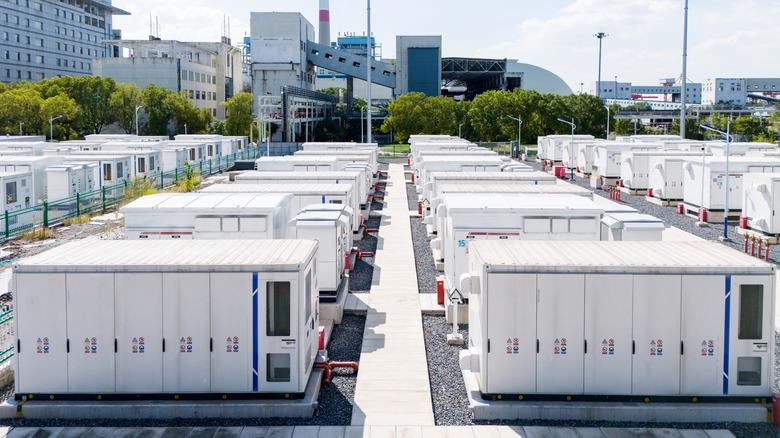
For manufacturers of BESS containers, modular data centers, industrial steel structures and heavy equipment, a single project may involve dozens or even hundreds of units.
Production and painting may continue for several weeks, months or longer.
Although every unit uses the same specified color code, the finished equipment may show visible color differences when production batches, application dates or coating conditions vary.
Why does this happen?
The answer involves more than color matching.
Industrial Coating Color Consistency depends on the combined control of coating formulation, raw material selection, manufacturing procedures, batch inspection, application conditions and long-term weathering performance.
At GranBond, we believe consistent industrial coating appearance requires a systematic approach from paint manufacturing to final equipment inspection.
This article examines eight key controls that help minimize color variation in large industrial manufacturing projects.
1. Select Weather-Resistant Resin Systems
The long-term color stability of industrial coatings begins with formulation design.
For outdoor equipment, the coating must provide not only corrosion protection but also resistance to sunlight, moisture, temperature changes and environmental exposure.
Resin selection plays an important role in determining how a coating maintains its original appearance.
Common topcoat technologies for outdoor industrial applications include:
- Aliphatic polyurethane topcoats
- Weather-resistant acrylic topcoats
- Other exterior-grade coating systems selected according to project requirements
Properly formulated weather-resistant coatings can help reduce UV-related chalking, gloss loss and color changes during service.
For example, aliphatic polyurethane topcoats are widely used where long-term outdoor appearance is important.
However, choosing a suitable resin alone does not guarantee excellent color retention.
The final performance also depends on the curing agent, pigment selection, additives, formulation balance and application quality.
For reliable Industrial Coating Color Consistency, manufacturers should evaluate both initial color matching and long-term weathering resistance.
2. Use Pigments with Suitable Lightfastness and Weather Resistance
Pigments determine the color of the coating, but not all pigments respond to outdoor exposure in the same way.
Some pigments offer excellent resistance to sunlight and environmental conditions, while others may experience fading or changes in hue over time.
This difference becomes especially important in long-term outdoor applications.
For example, certain organic pigment systems may be more sensitive to prolonged UV exposure than appropriately selected high-performance alternatives.
The performance depends on the specific pigment grade, formulation and exposure conditions rather than simply whether a pigment is organic or inorganic.
For large industrial projects, pigment selection should consider:
Lightfastness
The ability to resist color changes caused by light exposure.
Weather Resistance
Color stability under combined sunlight, moisture and temperature conditions.
Chemical Stability
Resistance to relevant environmental chemicals and contaminants.
Compatibility
Stable dispersion and performance within the selected resin system.
When multiple pigments are combined to achieve a specific color, their relative weathering behavior should also be considered.
If one pigment fades significantly faster than the others, the overall coating color may shift over time.
Therefore, Industrial Coating Color Consistency requires careful pigment selection as well as controlled formulation.
3. Maintain Stable Raw Material Sources
Even when a coating manufacturer uses the same nominal formula, variations in raw materials can influence the final color.
Different batches of resin, pigments or colorants may have small differences in properties such as:
- Hue
- Tinting strength
- Solids content
- Viscosity
- Dispersion characteristics
- Particle size distribution
These variations may affect color development during manufacturing.
For large projects requiring repeated coating deliveries, maintaining stable sources of critical raw materials can help reduce batch-to-batch variation.
If a raw material substitution becomes necessary, it should be evaluated before production.
The evaluation may include color matching, compatibility testing, application performance and other relevant quality checks.
Unverified material substitutions can create unnecessary risks in long-term supply projects.
Stable raw material management is therefore a fundamental part of Industrial Coating Color Consistency.
4. Reduce Unnecessary Small-Batch Color Adjustments
One of the most practical ways to improve batch-to-batch color consistency is to plan coating production around the project schedule.
Consider a manufacturing project requiring several tons of the same topcoat color.
If the total quantity is divided into many small production batches, each batch may require separate weighing, mixing, dispersion and color adjustment.
Every additional adjustment introduces another opportunity for process variation.
Potential sources of variation include:
- Raw material weighing accuracy
- Colorant dosing precision
- Mixing and dispersion efficiency
- Production equipment differences
- Operator adjustments
- Color measurement and evaluation conditions
Modern coating manufacturers can use spectrophotometers and computerized color-matching systems to support production control.
However, standardized operating procedures and trained technical personnel remain important.
Where practical, producing larger, well-controlled batches can reduce repeated color-adjustment operations.
This does not mean that one production batch is always the best solution.
Storage stability, shelf life, delivery schedules, available equipment capacity and project requirements must also be considered.
For long-duration projects, a planned batch strategy with controlled reference standards may be more practical than manufacturing all the paint at once.
The goal is to minimize unnecessary variability while maintaining reliable supply.
5. Establish a Master Color Standard and Batch Inspection System
A color code alone is not always sufficient to guarantee visual consistency.
For example, a specified RAL color identifies a target appearance, but the actual result can still depend on coating formulation, gloss, surface texture and measurement conditions.
For large industrial projects, the supplier and customer should establish an approved master color standard before mass production.
This may include:
Approved Reference Panel
A physical coated panel representing the accepted color, gloss and surface appearance.
Standardized Sample Preparation
Consistent substrate, primer, topcoat thickness, curing and conditioning conditions.
Instrumental Color Measurement
Use of a calibrated spectrophotometer under an agreed measurement procedure.
Defined Acceptance Criteria
Project-specific limits for color difference, gloss and visual appearance.
Understanding Color Difference: ΔE
Color difference is often expressed using a numerical value known as ΔE.
Depending on the project, color differences may be evaluated using CIELAB-based ΔE*ab or the CIEDE2000 color-difference formula.
A smaller calculated color difference generally indicates closer agreement under the selected measurement method.
However, there is no single universal ΔE acceptance limit suitable for every industrial coating project.
Acceptable limits depend on color, gloss, surface texture, measurement geometry, customer requirements and visual sensitivity.
The project specification should identify the measurement method and acceptance criteria rather than relying on an arbitrary numerical limit.
For industrial coating color quality control, color differences can be evaluated using standardized color-difference formulas. The ISO/CIE 11664-6 CIEDE2000 color-difference formula provides a recognized method for calculating color differences, helping manufacturers compare coating batches under consistent measurement conditions.
Why Measurement Conditions Matter
Color measurement can be influenced by:
- Illuminant and observer settings
- Measurement geometry
- Specular component settings
- Surface gloss and texture
- Sample preparation and curing
- Instrument calibration
Two panels may produce different readings if they are measured under inconsistent conditions.
For this reason, reliable Industrial Coating Color Consistency requires a repeatable measurement procedure, not simply a spectrophotometer reading.
6. Retain Production Batch Samples for Traceability
For projects involving repeated deliveries over several months, batch traceability becomes particularly valuable.
Each production batch should be linked to relevant manufacturing and quality records.
Recommended records include:
| Record | Purpose |
|---|---|
| Production Batch Number | Identify the coating batch |
| Raw Material Lot Numbers | Trace critical material sources |
| Color Adjustment Record | Track formulation corrections |
| Reference Spray Panel | Preserve the batch appearance |
| Color Measurement Data | Compare against the approved standard |
| Manufacturing Date | Support production history |
| Quality Inspection Results | Document batch acceptance |
Retained coated panels can help investigate color differences reported during later stages of a project.
For example, if a customer reports that equipment painted in March looks different from equipment painted in June, historical panels can help determine whether the variation existed at the time of coating production.
If retained panels show close initial agreement, the investigation may need to focus on differences in application conditions, substrate preparation or outdoor exposure.
A complete traceability system supports more efficient quality investigations and reduces uncertainty between suppliers and applicators.
7. Standardize Primer Color, Film Thickness and Spray Application
Even when every production batch meets the same color standard, finished equipment may still show visible differences after painting.
This is because the final appearance depends on the application process.
Control Dry Film Thickness
Coating thickness can influence the final color appearance, particularly for colors with relatively low hiding power.
Yellow, orange, red and certain bright colors may be more sensitive to the color of the underlying coating.
When the topcoat is too thin, the primer or intermediate coat may influence the visible result.
As the topcoat approaches adequate hiding, this effect generally becomes smaller.
However, the relationship varies by formulation and color.
For consistent results, applicators should maintain the specified dry film thickness and avoid both underapplication and excessive film build.
Standardize Primer and Intermediate Coat Colors
The color of the underlying coating can also affect the final topcoat appearance.
For example, a yellow topcoat applied over a dark gray primer may appear different from the same topcoat applied over a light gray primer if the topcoat does not provide sufficient hiding.
For large manufacturing projects, standardizing primer and intermediate coat colors can help reduce this variation.
Where necessary, the coating supplier may recommend a suitable undercoat shade to improve hiding and color uniformity.
Maintain Consistent Spray Parameters
Application parameters can influence film appearance, including gloss, texture and perceived color.
Important variables include:
- Spray gun and nozzle selection
- Spray pressure and atomization
- Thinner type and dilution ratio
- Application viscosity
- Spray distance and movement speed
- Spray overlap
- Ambient temperature and humidity
Differences in these parameters can produce variations in surface texture or gloss, even when the pigment composition remains unchanged.
These effects can be particularly noticeable in high-gloss coatings, metallic finishes and certain special colors.
A standardized application procedure and approved spray panel can help maintain Industrial Coating Color Consistency across different production lines and painting teams.
8. Separate Initial Color Consistency from Long-Term Color Retention
One frequently overlooked factor in large projects is the difference in outdoor exposure time.
Consider a BESS container manufacturing project delivered in several stages.
The first group of containers may have been installed outdoors for six months.
A second group may have been painted only recently.
Even if both groups were manufactured using the same approved coating system and color standard, their visible appearance may differ.
The earlier equipment has already experienced sunlight, rainfall, temperature changes and environmental contamination.
These conditions may influence gloss and color appearance.
This does not automatically mean that the later coating batch was manufactured incorrectly.
It is important to distinguish two performance requirements.
Initial Color Consistency
This describes how closely different coating batches match the approved reference when applied, cured and measured under comparable conditions.
Long-Term Color Retention
This describes how well the coating maintains its appearance after environmental exposure.
Both requirements are important, but they must be evaluated separately.
For outdoor equipment, the project specification may include accelerated weathering tests, natural exposure assessments or other agreed evaluation procedures.
Testing should be selected according to the intended service conditions and project requirements.
Industrial Coating Color Consistency at the time of manufacturing does not automatically guarantee identical appearance after different periods of outdoor exposure.
Industrial Coating Color Consistency: Project Control Checklist
For large industrial manufacturing projects, the following controls can help minimize unwanted color variation.
| Control Area | Recommended Action |
|---|---|
| Coating Formulation | Select weather-resistant resin and pigment systems |
| Raw Materials | Maintain stable sources and technical specifications |
| Production Planning | Reduce unnecessary small-batch color adjustments |
| Color Standards | Establish an approved master reference panel |
| Color Inspection | Use standardized measurement procedures |
| Batch Traceability | Retain reference panels and production records |
| Application Process | Control undercoat color, DFT and spray parameters |
| Long-Term Performance | Evaluate weathering and color retention separately |
Before mass production begins, coating suppliers and applicators should also agree on the color approval procedure.
This is especially important for projects involving multiple factories, subcontractors or delivery stages.
A jointly approved reference panel and documented acceptance criteria can help prevent later disputes.
Applications Where Color Consistency Matters Most
BESS Containers and Energy Storage Equipment
Large energy storage projects may include hundreds of containers manufactured across multiple production stages.
Consistent topcoat color helps maintain a uniform appearance across the installation.
Modular Data Centers
Modular data center equipment often requires consistent external finishes across enclosures, equipment modules and auxiliary structures.
Industrial Steel Structures
Large steel structures may be fabricated and coated at different workshops before final assembly.
Batch control and standardized application conditions help reduce visible differences between components.
Commercial Vehicles and Heavy Equipment
Truck bodies, trailers and industrial machinery may use standardized corporate colors that need to remain consistent across production batches.
In each application, color management should be integrated into the overall coating quality control process.
Frequently Asked Questions
Why does the same industrial paint color look different between batches?
Differences may result from raw material variation, colorant dosing, dispersion, production conditions or measurement procedures. Application conditions can also affect the final appearance.
Can two batches with the same RAL color code still look different?
Yes. A color code defines a reference target, but differences in gloss, texture, film thickness and formulation can influence the final appearance.
Does coating thickness affect paint color?
It can, especially when the topcoat has limited hiding power. Once adequate hiding is achieved, the influence of the undercoat generally decreases.
How is industrial paint color difference measured?
Color difference can be evaluated using a spectrophotometer and an agreed color-difference formula, such as ΔE*ab or CIEDE2000, under standardized measurement conditions.
What is an acceptable ΔE value for industrial coatings?
There is no universal value suitable for every project. Acceptance criteria should be agreed upon based on the specified color, finish, measurement method and customer requirements.
Why do newly painted containers look different from older containers?
Outdoor exposure may change the appearance of earlier coatings through gloss loss, weathering or surface contamination. Initial batch consistency and long-term color retention should be assessed separately.
GranBond Industrial Coating Solutions
At GranBond, we understand that industrial coating quality involves more than corrosion resistance.
For manufacturers of BESS containers, modular data centers, commercial vehicles and industrial steel structures, consistent color appearance is also an important production requirement.
Our industrial coating solutions include epoxy primers, intermediate coatings and weather-resistant topcoats designed for different substrates and operating environments.
We support customers in evaluating coating system selection, color requirements, application conditions and quality control procedures.
For large projects, early coordination between the coating supplier, equipment manufacturer and painting contractor can help establish practical color standards and reduce avoidable variation.
Need Consistent Coating Colors Across Multiple Production Batches?
If your project involves hundreds of containers, modular equipment units or large industrial steel components, contact GranBond to discuss coating system selection, color matching and batch consistency requirements.
GranBond — BUILT FOR HARSH ENVIRONMENTS.