A Small Leak Can Threaten a High-Value Industrial Asset
A small defect can sometimes lead to a much larger failure.
This principle is especially relevant to modern industrial equipment, where a seemingly minor water ingress point can threaten an entire electrical system.
Today, battery energy storage system (BESS) containers, modular data centers, prefabricated electrical substations and outdoor power equipment are widely used in energy, communications and industrial infrastructure.
These enclosures are expected to operate outdoors for many years while facing rainfall, humidity, salt-laden air, solar radiation and temperature fluctuations.
For such equipment, Industrial Enclosure Corrosion Protection is not simply about preventing rust on steel surfaces.
It is also about preserving enclosure integrity, reducing maintenance requirements and protecting the valuable systems housed inside.
A large BESS container or modular data center may contain batteries, power conversion systems, electrical distribution equipment, servers, communication devices and sophisticated control systems.
Yet a small, overlooked leak in the enclosure roof can create risks far beyond the cost of the coating itself.
There is an old Chinese proverb:
“A thousand-mile dike can collapse because of a small ant hole.”
For industrial enclosures, the lesson is clear: long-term protection depends on controlling even the smallest vulnerable details.
In this article, we examine eight critical factors affecting roof corrosion protection, waterproofing and the long-term reliability of high-value industrial equipment.
1. Why the Roof Is a Critical Area for Industrial Enclosure Corrosion Protection
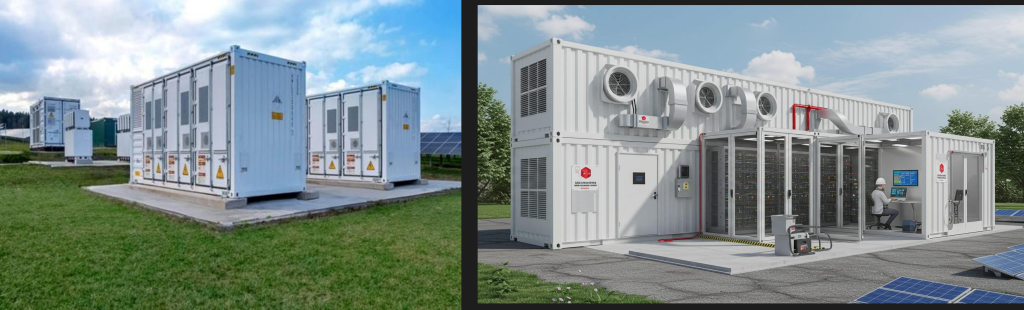
The roof of an outdoor industrial enclosure is one of its most environmentally exposed surfaces.
Unlike vertical side panels, roof surfaces can experience extended contact with rainwater, standing water and accumulated contaminants.
Large industrial enclosures may have extensive roof areas constructed from welded steel panels and supporting members.
During manufacturing, welding or long-term operation, local deformation can create shallow areas where water collects.
If drainage slopes are inadequate, water may remain on the roof long after rainfall has stopped.
This creates several potential problems.
Prolonged Water Contact
Standing water increases the duration of moisture exposure.
Depending on the coating system, extended wet contact may contribute to water absorption, blistering or localized deterioration.
Accumulation of Contaminants
Dust, airborne salts and other deposits may accumulate in areas where water collects.
In coastal or industrial environments, these deposits can increase the severity of localized exposure.
Difficult-to-Inspect Areas
Roof reinforcement details, equipment mounts and penetrations may create areas that are difficult to inspect and maintain.
For reliable Industrial Enclosure Corrosion Protection, roof drainage and coating performance must be considered together.
A coating designed for atmospheric exposure should not automatically be assumed suitable for prolonged ponding water.
2. Roof Welds and Structural Connections Are Potential Leakage Points
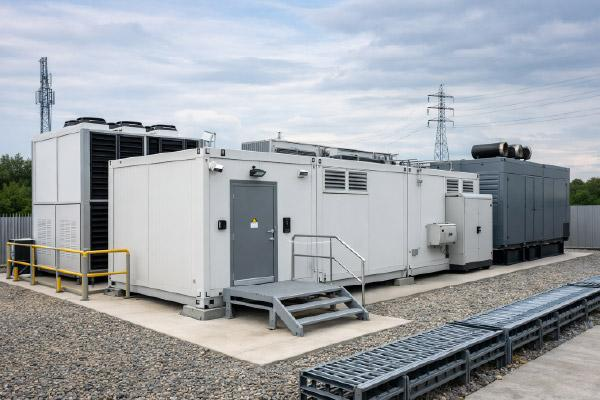
Industrial enclosure roofs frequently contain welded joints and structural connections.
Typical examples include:
- Roof panel weld seams
- Reinforcement connections
- Lifting structures and welded attachments
- Ventilation equipment openings
- Cable and pipe penetrations
- Access hatches and maintenance openings
- Other roof-mounted equipment interfaces
These locations can be more difficult to protect than flat steel panels.
Complex geometry may result in uneven coating coverage or insufficient local dry film thickness.
More importantly, certain manufacturing defects can compromise the enclosure’s watertight integrity.
Weld porosity, cracks, incomplete fusion or other unacceptable discontinuities may create or contribute to leakage pathways, depending on their location and severity.
Thermal movement and mechanical vibration can further stress joints and sealing interfaces over time.
This is why roof protection must begin with sound structural design and welding quality.
Protective coatings cannot compensate for a through-wall welding defect or replace a properly designed watertight joint.
For critical enclosures, weld inspection and appropriate leak testing should be included in the manufacturing quality plan.
3. How a Small Roof Leak Can Threaten High-Value Equipment
A localized coating defect on an ordinary outdoor steel structure may initially result in visible rust.
For an industrial enclosure containing sensitive electrical systems, the consequences of actual water ingress can be more serious.
Battery Energy Storage Systems
BESS containers may house battery modules, battery management systems (BMS), power conversion systems (PCS), distribution equipment and monitoring devices.
Water entering the enclosure may create electrical and corrosion risks.
Modular Data Centers
Modular data centers can contain servers, communication equipment, network systems, electrical distribution components and cooling controls.
Moisture intrusion may affect equipment reliability and lead to costly service interruptions.
Prefabricated Electrical Substations
Electrical enclosures may contain switchgear, protection relays, automation systems and other sensitive components.
Water ingress can contribute to insulation deterioration, corrosion and equipment malfunction.
Depending on the equipment and circumstances, the consequences may include:
- Electrical faults or reduced insulation performance
- Corrosion of electronic components
- Control system malfunction
- Unplanned shutdowns
- Maintenance and replacement costs
- Potential safety hazards
The financial consequences may extend beyond the damaged components themselves.
System downtime, service disruption and repair logistics can create substantial indirect costs.
This is why Industrial Enclosure Corrosion Protection should be viewed as part of a broader asset protection strategy.
However, an important distinction must be made:
A pinhole in a coating is not necessarily a through-wall leak in the enclosure.
A coating discontinuity may expose steel to corrosion, while water ingress into the equipment requires a leakage path through the enclosure structure, joint, penetration or other boundary.
Both problems matter, but they require different inspection and corrective measures.
4. Roof Waterproofing Requires More Than a Protective Coating
A high-performance anti-corrosion coating system is important, but it cannot replace proper enclosure waterproofing.
For roofs with potential leakage risks, protection should be approached in three stages.
Stage 1: Verify Weld Integrity
Before coating application, roof welds should be inspected according to the applicable design and manufacturing requirements.
Areas requiring watertight integrity should be evaluated for defects that may compromise sealing.
Where specified, appropriate nondestructive examination or leak testing should be performed.
The objective is to establish that the structural boundary is suitable before applying coatings or sealants.
Stage 2: Apply Compatible Joint Sealing Systems
Certain joints, interfaces and penetrations may require additional sealing.
Depending on the design, suitable materials may include polyurethane sealants or other industrial sealing systems.
Selection should consider:
- Water resistance
- Outdoor weathering resistance
- Expected joint movement
- Adhesion to the relevant substrate
- Compatibility with primers and topcoats
- Application and curing requirements
The sequence of sealant and coating application must follow a validated procedure.
Not every sealant is compatible with every industrial coating system.
For example, a sealant may require application over a specified primer, while another system may have different surface preparation requirements.
Stage 3: Apply a Complete Corrosion Protection System
After structural integrity and sealing requirements have been addressed, the enclosure requires a suitable protective coating system.
For outdoor carbon steel structures, an illustrative system may include:
| Coating Layer | Typical Function |
|---|---|
| Epoxy Primer | Substrate adhesion and corrosion protection |
| High-Build Epoxy Intermediate | Barrier protection and film build |
| Weather-Resistant Topcoat | UV resistance and exterior protection |
The final system must be selected according to the substrate, environment and project specification.
For roof areas exposed to persistent standing water, additional waterproofing measures or specifically qualified coating systems may be required.
Industrial Enclosure Corrosion Protection and enclosure waterproofing are complementary disciplines—not interchangeable solutions.
Long-term corrosion protection requires a coating system selected for the substrate and expected service environment. ISO 12944-5 provides guidance on protective paint systems for steel structures, supporting the selection of compatible primers, intermediate coats and topcoats for different corrosion protection requirements.
5. Coating Density and Barrier Properties: Why Microscopic Structure Matters
A coating can appear smooth and continuous while still containing microscopic defects or an internal structure that allows relatively rapid transport of water and other substances.
Protective coatings are composite materials formed from binders, pigments, functional fillers and additives.
Their barrier performance depends on the interaction of these components and the quality of film formation.
Water and oxygen can migrate through polymer coatings over time.
Depending on the system and exposure conditions, this transport can contribute to corrosion processes at the steel surface.
A coating with poor barrier properties may be more vulnerable to water absorption, blistering, adhesion loss and underfilm corrosion.
Therefore, successful Industrial Enclosure Corrosion Protection requires more than achieving a specified dry film thickness.
It also requires a coating film with suitable permeability, adhesion, curing and mechanical performance.
Resin Chemistry and Crosslinking
The binder forms the continuous polymer phase of the coating.
In epoxy systems, resin and curing-agent selection influence crosslinking, adhesion, chemical resistance and barrier properties.
An appropriately formulated and properly cured epoxy coating can provide effective protection in demanding industrial environments.
However, incomplete curing may reduce performance even when the surface appears dry.
Correct mixing ratios, application conditions and curing time are essential.
Functional Fillers and Barrier Protection
Certain functional fillers can improve barrier performance when properly selected and incorporated into a coating formulation.
Examples include:
- Micaceous iron oxide (MIO)
- Mica-based fillers
- Glass flakes
- Other suitable lamellar barrier pigments
These materials may help increase the complexity of diffusion pathways within the coating film.
Their effectiveness depends on particle geometry, dispersion, orientation, concentration and compatibility with the binder.
6. The Tortuous Path Effect: How Lamellar Fillers Improve Barrier Performance
One important concept in heavy-duty protective coatings is the tortuous path effect.
Imagine water molecules attempting to move through a coating toward the steel substrate.
In a coating with relatively direct transport pathways, moisture may move through the film more readily.
When suitably oriented plate-like fillers are distributed throughout the polymer matrix, the diffusion pathway can become longer and more complex.
Instead of moving along a relatively direct route, penetrating substances must travel around the dispersed particles.
This can slow their transport through the coating.
Why MIO and Glass Flake Fillers Are Used
Micaceous iron oxide and glass flake materials are commonly associated with barrier-type protective coating formulations.
When appropriately formulated, these plate-like particles can contribute to improved resistance to environmental penetration.
However, the benefit is not determined by filler type alone.
Important variables include:
Particle Size and Shape
The geometry of the filler influences how it can be distributed within the coating.
Particle Orientation
Plate-like fillers may provide stronger barrier effects when their orientation creates longer diffusion pathways.
Dispersion Quality
Agglomeration and poor wetting can reduce coating uniformity.
Binder Compatibility
The filler must be properly incorporated into the resin system.
Film Thickness and Curing
The final protective film must achieve the specified thickness and curing conditions.
For high-performance Industrial Enclosure Corrosion Protection, the objective is a balanced formulation rather than simply adding the largest possible quantity of barrier filler.
7. Why More Filler or Greater Film Thickness Is Not Always Better
A common misconception is that adding more functional filler automatically makes a coating more impermeable.
In practice, excessive pigment and filler loading can reduce performance.
The binder must adequately wet and surround the dispersed particles.
If the formulation contains too much pigment or filler relative to the available binder, the film may develop undesirable porosity or lose important mechanical properties.
One relevant formulation concept is the relationship between pigment volume concentration (PVC) and critical pigment volume concentration (CPVC).
PVC describes the volume fraction of pigment and filler relative to the total volume of nonvolatile coating components.
CPVC is associated with the point at which the binder is no longer sufficient to fill the spaces between pigment particles under the relevant formulation conditions.
Approaching or exceeding CPVC can significantly change coating properties.
The exact relationship depends on the formulation and intended coating function.
Important factors include:
- Binder-to-pigment ratio
- Pigment particle size and shape
- Filler surface treatment
- Wetting and dispersion
- PVC and CPVC
- Coating viscosity and leveling
- Film thickness
- Curing and crosslinking
Similarly, excessive dry film thickness is not automatically beneficial.
Overapplication can contribute to defects such as solvent retention, sagging or other film formation problems.
The correct approach is to design and apply a coating system that meets its specified performance requirements.
For industrial enclosure roofs, this means combining suitable barrier properties with reliable application and appropriate waterproofing details.
8. Application Quality and Inspection Determine Final Protection
Even a well-designed protective coating may fail to perform as expected if it is applied incorrectly.
Roof surfaces, welded joints and complex structural details require particular attention.
Surface Preparation
Remove welding residues, spatter, oil, dust and other contaminants.
Prepare the steel according to the coating system and project requirements.
Stripe Coating
Apply localized stripe coats to welds, edges, corners and other critical details where specified.
This helps improve coverage in areas that may be difficult to protect using full spray application alone.
Dry Film Thickness Control
Measure coating thickness according to the approved inspection procedure.
Insufficient thickness may reduce protection, while excessive thickness can introduce additional defects.
Environmental Control
Monitor ambient temperature, substrate temperature, humidity and dew point.
Follow the coating manufacturer’s application and recoat requirements.
Coating Continuity Inspection
Inspect for visible pinholes, missed areas and other coating defects.
Where appropriate, use a suitable holiday detection method compatible with the coating system.
Enclosure Watertightness Testing
For equipment with defined ingress protection requirements, perform appropriate enclosure leakage or water ingress testing according to the relevant design and project specification.
This may involve controlled water spray testing or other approved procedures.
The test method should be suitable for the enclosure and its intended protection level.
A coating holiday test cannot establish that the complete enclosure is watertight.
Likewise, a successful enclosure water ingress test does not prove that every protective coating layer is free from defects.
Both types of verification may be necessary.
For outdoor electrical equipment, enclosure protection against water ingress should be evaluated according to the intended operating environment. The IEC 60529 standard establishes the IP Code classification system for degrees of protection provided by electrical equipment enclosures.
Industrial Enclosure Corrosion Protection: Recommended Quality Checklist
For BESS containers, modular data centers and outdoor electrical equipment, the following control points can help improve long-term reliability.
| Control Area | Recommended Action |
|---|---|
| Roof Design | Provide appropriate drainage and minimize water accumulation |
| Weld Integrity | Inspect critical roof welds and structural connections |
| Joint Sealing | Use compatible, validated sealing materials |
| Coating Selection | Match the coating system to the actual exposure conditions |
| Barrier Formulation | Optimize binder, functional fillers and curing |
| Surface Preparation | Remove contamination and prepare the substrate |
| Coating Application | Control stripe coating, DFT and environmental conditions |
| Final Inspection | Verify coating continuity and enclosure watertightness separately |
These controls should be incorporated into the project quality plan rather than treated as isolated inspection activities.
Frequently Asked Questions
Why are industrial enclosure roofs more vulnerable to water-related problems?
Roofs receive direct rainfall and solar exposure. Poor drainage, complex welded details and equipment penetrations may increase the risk of prolonged water contact or leakage.
Can epoxy anti-corrosion coatings make a BESS container roof waterproof?
An epoxy coating can provide corrosion protection and may contribute to surface barrier performance, but it cannot replace sound welds, properly sealed joints or a validated enclosure waterproofing design.
What is the tortuous path effect in protective coatings?
It describes how appropriately distributed plate-like fillers can create longer, more complex pathways for water and other substances moving through a coating film.
Does a thicker coating always provide better waterproofing?
No. Coating thickness must remain within the specified range. Greater thickness cannot repair structural leaks and may introduce film defects if excessive.
What is the difference between coating pinholes and roof leakage?
A coating pinhole is a defect in the protective film. Roof leakage involves water passing through the enclosure boundary. A coating defect does not necessarily create a through-wall leakage path.
How should roof waterproofing and corrosion protection be inspected?
Use suitable coating inspection methods to assess film quality and separate enclosure water ingress tests to verify watertightness, according to the applicable project requirements.
GranBond: Protective Coating Solutions for High-Value Industrial Equipment
At GranBond, we understand that protecting an industrial enclosure involves more than preventing visible rust.
For BESS containers, modular data centers, prefabricated substations and outdoor power equipment, reliable protection depends on the complete relationship between structural design, surface preparation, coating formulation, application and inspection.
Our industrial coating solutions include epoxy primers, high-build epoxy intermediate coatings and weather-resistant topcoats for demanding industrial applications.
We focus on important protective coating properties such as:
- Adhesion
- Corrosion resistance
- Water resistance
- Barrier performance
- Weathering resistance
- Application reliability
By considering resin chemistry, functional filler selection, coating compatibility and application requirements, GranBond supports manufacturers seeking more reliable long-term protection for industrial equipment.
Protect the Equipment Inside, Not Just the Steel Outside
A small protective defect may lead to consequences far greater than the cost of the coating itself.
For high-value industrial equipment, long-term asset protection begins with attention to every critical detail.
Contact GranBond to discuss protective coating systems for your BESS containers, modular data centers, electrical enclosures and industrial steel structures.
GranBond — BUILT FOR HARSH ENVIRONMENTS.