Why Properly Cleaned Steel Can Begin Rusting Before the Primer Is Applied
In industrial protective coating applications, surface preparation is one of the most important factors affecting long-term corrosion protection.
Manufacturers often invest considerable effort in removing oil, dust, soluble salts, rust and other contaminants from steel surfaces before painting.
However, a frustrating problem can occur after cleaning:
The steel surface begins to rust again before the primer is applied.
This phenomenon is commonly known as flash rust.
It can appear as a light yellow, orange or reddish-brown discoloration on freshly cleaned or prepared steel.
For manufacturers of battery energy storage system (BESS) containers, modular data centers, prefabricated electrical equipment and industrial steel structures, flash rust can interrupt production and create additional surface preparation costs.
More importantly, if the condition is not properly assessed before coating, it may affect coating adhesion and long-term protective performance.
Why does flash rust occur, and how can manufacturers prevent it?
In this article, GranBond examines seven common causes of Flash Rust on Steel and practical methods for controlling the problem before industrial coating application.
1. What Is Flash Rust on Steel?
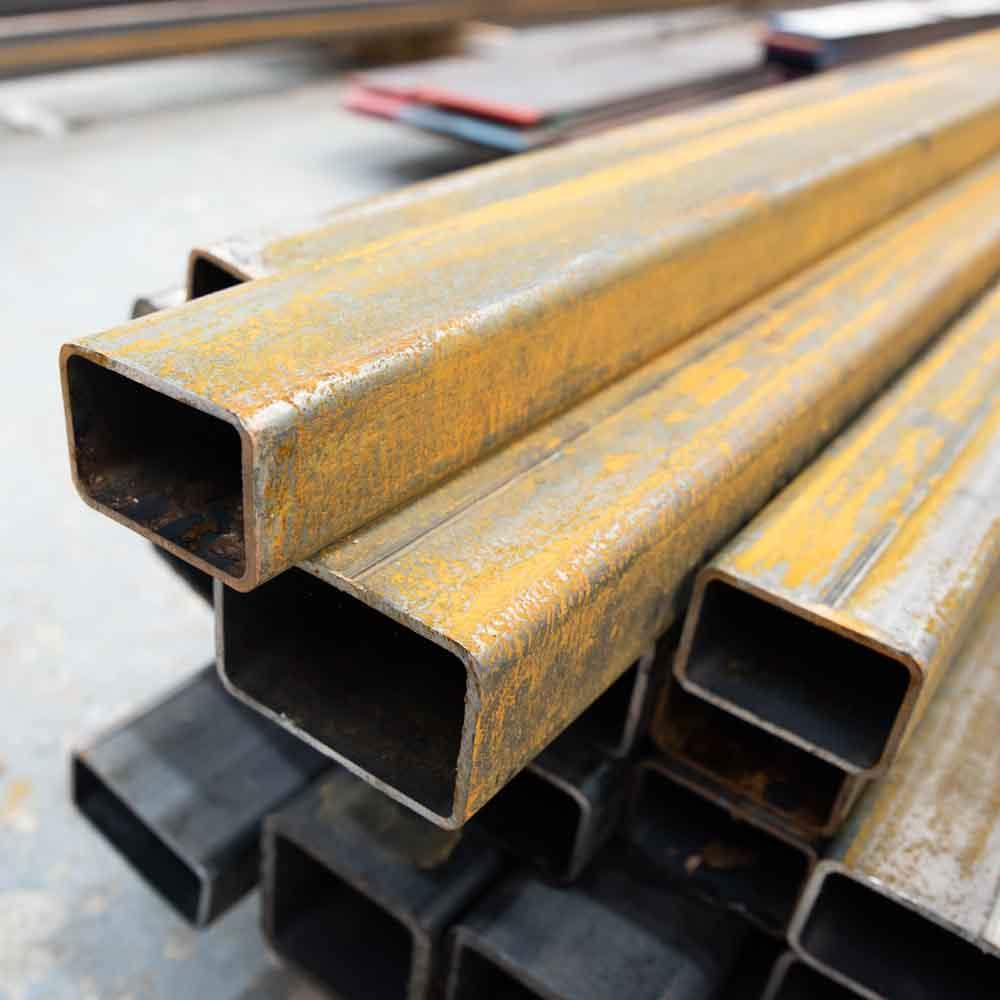
Flash rust is the rapid formation of corrosion products on freshly exposed steel surfaces.
It is commonly associated with wet surface preparation, water cleaning or exposure of bare steel to moisture.
When unprotected steel comes into contact with water and oxygen, electrochemical corrosion reactions can begin.
Depending on the environmental conditions, visible discoloration may develop within a relatively short period.
Why Does Freshly Cleaned Steel Rust So Quickly?
Before cleaning, a steel surface may contain oil, temporary corrosion inhibitors, mill scale or other materials that partially limit direct contact with moisture.
When these materials are removed, the exposed steel becomes more vulnerable to corrosion.
If moisture remains on the surface or the surrounding environment is humid, oxidation can begin before the coating is applied.
This does not mean cleaning is harmful.
Proper cleaning is essential for reliable coating performance.
The problem occurs when cleaning, drying and coating application are not managed as a coordinated process.
2. Cause #1: Residual Moisture After Water-Based Cleaning
Water-based cleaning is commonly used to remove certain contaminants from steel.
It may be particularly important when water-soluble salts or other residues cannot be effectively removed through ordinary solvent wiping.
However, after washing, water may remain in:
- Weld seams
- Corners and edges
- Hollow-section openings
- Structural connections
- Surface irregularities
- Reinforcement details
If the steel is not adequately dried, this residual moisture may contribute to rapid corrosion.
How to Prevent It
Use a controlled cleaning and drying procedure.
Pay particular attention to welded structures, square tubes and other geometrically complex components.
Where appropriate, use clean compressed air or suitable drying equipment to remove retained water.
Confirm that the steel is sufficiently dry before applying the primer.
For BESS container frames and modular equipment structures, drainage and drying requirements should be considered during process planning.
3. Cause #2: High Relative Humidity and Condensation
Even when steel appears dry, moisture can form on its surface under unfavorable environmental conditions.
Condensation may occur when the steel temperature approaches or falls below the dew point of the surrounding air.
This is especially relevant in humid workshops, coastal manufacturing facilities and locations experiencing large temperature fluctuations.
For example, a steel structure stored overnight may remain relatively cool when warmer, humid air enters the workshop the following morning.
Under these conditions, condensation may develop on the steel.
The resulting moisture can promote Flash Rust on Steel.
How to Prevent It
Monitor:
- Ambient temperature
- Relative humidity
- Steel surface temperature
- Dew point
- Workshop ventilation
Maintain suitable application conditions according to the coating manufacturer’s technical data sheet and project specification.
A commonly used coating application practice is to maintain the steel temperature at least 3°C above the dew point, unless the approved coating specification requires otherwise.
This margin should not be treated as a universal guarantee against condensation or corrosion.
4. Cause #3: Soluble Salt Residues Remaining on Steel
One important connection between surface contamination and flash rust is the presence of soluble salts.
Steel may contain residues from:
- Manufacturing processes
- Temporary corrosion inhibitors
- Metalworking fluids
- Coastal atmospheric exposure
- Contaminated cleaning water
- Previous storage conditions
Certain soluble contaminants can increase the conductivity of moisture on the steel surface and contribute to corrosion.
In the previous GranBond article on coating adhesion failure, we discussed how water-soluble residues may remain on steel even when the surface appears visually clean.
The same issue can affect freshly cleaned steel before coating.
Why Solvent Wiping May Not Be Enough
Organic solvent cleaning can be effective for certain oils and greases.
However, it does not automatically remove water-soluble inorganic salts.
When soluble salt contamination is suspected, manufacturers should select an appropriate cleaning procedure and verify its effectiveness.
Methods associated with ISO 8502-6 and ISO 8502-9 can support the assessment of water-soluble surface contamination.
Conductivity-based testing estimates soluble contamination under specified conditions but does not identify individual chemical species.
How to Prevent It
Use suitable cleaning water and validated washing procedures.
Avoid transferring contaminants between surfaces.
Where required, assess soluble salt levels before coating.
5. Cause #4: Delays Between Surface Preparation and Primer Application
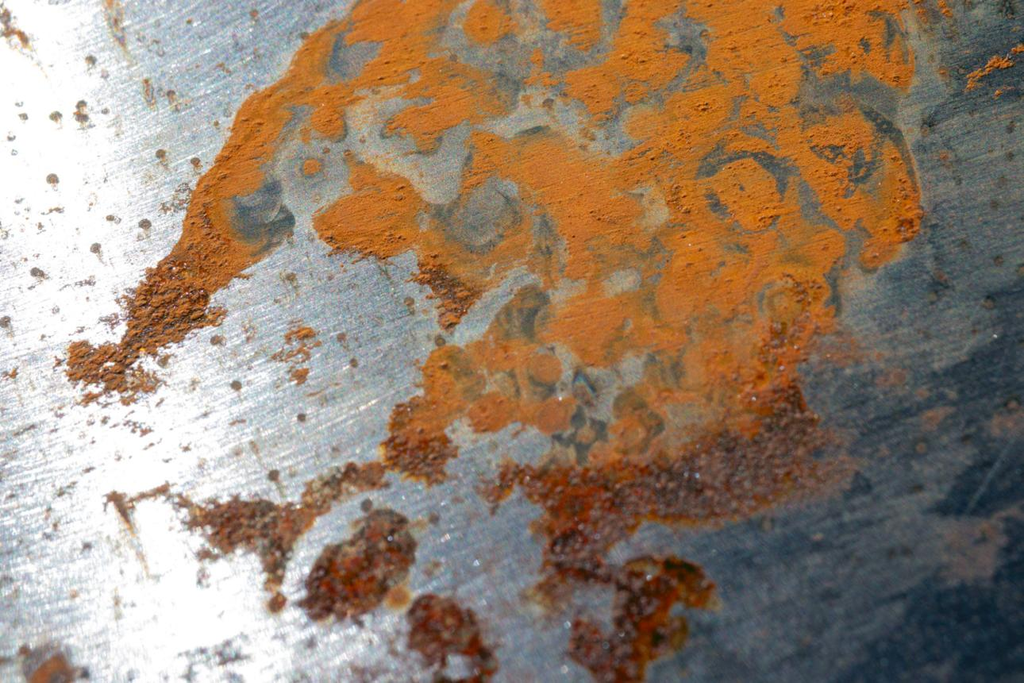
After abrasive blasting or other surface preparation, bare steel is exposed to the surrounding environment.
If the prepared surface remains uncoated for an extended period, its condition may deteriorate.
The rate of deterioration depends on humidity, temperature, airborne contamination and other environmental factors.
In some manufacturing facilities, steel structures are prepared in one workshop and transferred to another location for coating.
During this transfer, the steel may be exposed to moisture, dust or changing environmental conditions.
How to Prevent It
Coordinate surface preparation and primer application.
Minimize unnecessary waiting periods.
Protect prepared steel during transportation between production areas.
Inspect the surface again if environmental conditions change or if coating is delayed.
The surface condition at the moment of coating application matters more than how clean the steel was immediately after preparation.
6. Cause #5: Contaminated Rinse Water
Water quality can influence the effectiveness of steel cleaning.
If rinse water contains excessive dissolved salts or other contaminants, cleaning may leave residues on the surface.
As water evaporates, some dissolved substances may remain.
These residues can contribute to unfavorable surface conditions.
For manufacturers using water-based cleaning systems, the quality of the final rinse deserves particular attention.
How to Prevent It
Establish water quality requirements appropriate to the cleaning process.
Monitor the condition of reused cleaning solutions.
Use suitable final rinsing procedures.
Avoid allowing contaminated wash water to dry on the steel.
Where necessary, evaluate rinse-water conductivity or other relevant parameters.
The objective is to remove contamination rather than redistribute it.
7. Cause #6: Inadequate Drying in Complex Steel Structures
Large industrial structures contain many areas where water can become trapped.
For example, BESS container frames may include square hollow sections, welded reinforcement structures, brackets and narrow gaps.
Even when broad surfaces appear dry, moisture may remain in hidden locations.
This can cause localized rusting around joints and connections.
Why Complex Geometry Matters
Water may collect through capillary action or remain in areas with poor drainage.
Weld seams and structural details may also be more difficult to inspect.
If the coating process begins before these areas are adequately dried, the remaining moisture may create defects or interfere with coating application.
How to Prevent It
Design cleaning and drying procedures around the actual structure.
Identify potential water-trapping areas.
Provide adequate drainage where feasible.
Inspect critical details before priming.
Do not rely solely on the appearance of large flat surfaces to judge whether the complete structure is dry.
8. Cause #7: Incorrect Use of Temporary Rust Inhibitors
Temporary corrosion inhibitors can help protect steel during processing, storage or transportation.
However, they must be compatible with the subsequent coating process.
Some temporary protective products leave residues that require removal before painting.
If the residue is not removed, it may interfere with primer adhesion or other coating properties.
Conversely, removing a temporary inhibitor too early may expose steel to corrosion before coating.
How to Prevent It
Understand the type of temporary rust inhibitor used by the steel supplier.
Confirm whether it is intended to remain on the surface before painting.
Where removal is required, use a validated cleaning procedure.
Avoid assuming that a rust-preventive treatment is automatically compatible with epoxy primers or other protective coatings.
For high-value industrial equipment, supplier documentation and coating compatibility should be considered before production.
Can Flash Rust Affect Coating Adhesion?
Flash rust does not always have the same effect on every coating system.
The severity of the condition, coating chemistry, substrate preparation requirements and exposure environment all matter.
Some coating systems are designed and qualified for application over a defined degree of flash rust.
Other systems require a cleaner surface condition.
Therefore, it is not technically correct to assume that every visible trace of flash rust automatically causes coating failure.
It is equally incorrect to assume that flash rust can always be ignored.
Potential Risks
Depending on the coating system and surface condition, unacceptable flash rust may contribute to:
- Reduced primer adhesion
- Surface contamination
- Underfilm corrosion
- Blistering
- Localized coating defects
- Additional maintenance requirements
The appropriate acceptance criteria should be determined by the coating specification and relevant surface preparation standards.
If the surface condition exceeds the permitted level, additional preparation may be necessary.
Not all flash rust conditions are equivalent. ISO 8501-4 provides visual assessment guidance for steel surfaces prepared by high-pressure water jetting, including flash rust grades. The acceptable surface condition before coating should be determined by the approved coating specification.
Flash Rust vs. Existing Rust: What Is the Difference?
| Factor | Flash Rust | Existing Rust |
|---|---|---|
| Formation | Rapid corrosion on freshly exposed steel | Corrosion accumulated over time |
| Typical Appearance | Light yellow, orange or reddish discoloration | May include darker or heavier corrosion products |
| Common Conditions | Moisture after cleaning or preparation | Prolonged environmental exposure |
| Surface Condition | May initially be relatively thin | May include thicker or less adherent rust |
| Coating Implications | Depends on severity and coating specification | Requires preparation according to project requirements |
Visual appearance alone may not be sufficient to establish whether the surface is acceptable for coating.
The relevant standard, coating specification and inspection procedure should be followed.
Practical Flash Rust Prevention Checklist
For BESS containers, modular data centers and fabricated steel structures, manufacturers can use the following quality control checklist.
| Production Stage | Key Risk | Recommended Control |
|---|---|---|
| Incoming Steel | Unknown residues or temporary inhibitors | Review supplier processing information |
| Cleaning | Incomplete contaminant removal | Use validated cleaning procedures |
| Rinsing | Dissolved salts left on the surface | Control rinse-water quality |
| Drying | Retained water in joints and hollow sections | Inspect drainage and drying |
| Surface Preparation | Bare steel exposed to moisture | Control environmental conditions |
| Transfer and Storage | Condensation or recontamination | Protect prepared steel |
| Primer Application | Unacceptable surface condition | Inspect immediately before coating |
| Quality Control | Undetected rust or contamination | Document acceptance criteria and results |
A coordinated process can help reduce unnecessary rework and improve coating reliability.
Why Flash Rust Prevention Matters for BESS and Modular Equipment
Large industrial enclosures are manufactured through multiple production stages.
Steel fabrication, welding, surface preparation, cleaning and coating application may occur in different workshops or at different times.
This creates opportunities for moisture exposure and surface deterioration.
For BESS containers and modular data centers, repeated surface preparation can increase manufacturing time and cost.
More importantly, coating application over an unacceptable substrate may compromise the intended corrosion protection system.
Manufacturers should therefore treat flash rust prevention as part of their overall quality management process.
The goal is not simply to remove visible rust.
It is to ensure that the steel surface meets the coating system’s requirements at the time of application.
Frequently Asked Questions
Why does steel rust immediately after washing?
Water-based cleaning may expose bare steel to moisture and oxygen. If drying is delayed or environmental conditions are unfavorable, corrosion can begin quickly.
Can flash rust appear after abrasive blasting?
Yes. Freshly blasted steel can corrode when exposed to moisture or condensation before priming.
Does flash rust always need to be removed before painting?
Not necessarily. Acceptability depends on the degree of flash rust and the approved coating system. Follow the manufacturer’s requirements and project specification.
Can ordinary paint thinner prevent flash rust?
Paint thinner is not a substitute for proper surface preparation, moisture control or a validated corrosion prevention process.
Can soluble salts cause flash rust?
Certain soluble contaminants can contribute to corrosion under wet conditions. Their significance depends on the type and amount of contamination and the exposure environment.
How soon should primer be applied after steel cleaning?
As soon as practical within the approved production procedure, provided the surface meets the coating specification. There is no universal maximum waiting time suitable for every environment and coating system.
GranBond: Industrial Coating Solutions Begin with Proper Surface Preparation
At GranBond, we understand that long-term corrosion protection depends on more than the quality of the paint itself.
With more than 20 years of industrial protective coating experience, we provide epoxy primers, epoxy intermediate coatings, polyurethane topcoats and compatible coating systems for demanding applications.
Our solutions support manufacturers of:
- Battery energy storage containers
- Modular data centers
- Prefabricated electrical equipment
- Industrial steel structures
- Commercial vehicles
- Marine and offshore equipment
We recognize that surface cleanliness, moisture control, coating compatibility, application conditions and inspection are all important to the final protective performance.
Need Help Improving Your Industrial Coating Process?
If your manufacturing process involves water-based cleaning, abrasive blasting or repeated surface preparation, selecting the right coating system and controlling surface conditions are essential.
Contact GranBond to discuss protective coating systems and application requirements for your industrial equipment.
GranBond — BUILT FOR HARSH ENVIRONMENTS.